Titsian Tabidze and Paolo Iashvili in the 'Poetry Machine'
Excerpt from the film Chronicle of Several Days of the Democratic Republic of Georgia [1919–1920]. Author: Nino Natroshvili, Director: Andro Chiaureli
The poet, publicist, and public figure Titsian (Tite) Tabidze was born on April 2, 1895, in the village of Shuamtha, Kutaisi Governorate (present-day Vani Municipality), into the family of priest Iustine Tabidze and Elisabed Pkhakadze.
According to official documents, Titsian Tabidze's date of birth is June 2, 1893, and his place of birth is the village of Chqvishi in the Kutaisi Governorate (which is part of the Shuamtha territorial community); however, the poet wrote in his autobiography:
'I was born in 1895, on April 2, in western Georgia, in the village of Shuamtha — near Orpiri. Orpiri is a part of Sachino, which means prominent, remarkable. This once-wealthy land had become so desolate that in my childhood no longer anyone believed it had been referred to in chronicles as the granary of Georgia...
From my early childhood, strange landscapes unfolded around me. I especially remember the sunset over the Rioni valley: the bright, hot light of day descended into Lake Paliastomi in such a way that the flames of fire half-covered the sky above the sea...
Since time immemorial, Orpiri was considered the port of the Rioni. I remember river steamboats coming here, bringing up corn and dried fruit.'
Titsian's father, Iustine, studied at the Tbilisi Theological Seminary, but was expelled from the 6th grade after student Ioseb Laghiashvili killed the seminary rector, Pavel Chudetsky. Iustine was accused of being among the revolutionary-minded students. Following this, Iustine lived in Tbilisi for three years, working in the Tbilisi Legal Society while also growing close to literary circles and collaborating with the newspaper *Iveria*.
Iustine's father and the grandfather of Titsian and Galaktion, Stephane, was a village priest. At his request and through the ordination of Gabriel, Bishop of Imereti, Iustine was ordained as a priest and returned to the village. Right here, in his own home, he opened a parish school. For a certain period, he also continued his publicistic activities.
Titsian received his elementary education at the parish school founded by his father. By the age of 4, he had already learned to read and write. Between 1901 and 1905, he was educated at the Kutaisi Theological Seminary, and in 1906, he enrolled in the Kutaisi Classical Gymnasium, where he studied until 1913.
In the photo: Kutaisi Classical Gymnasium, early 20th century.
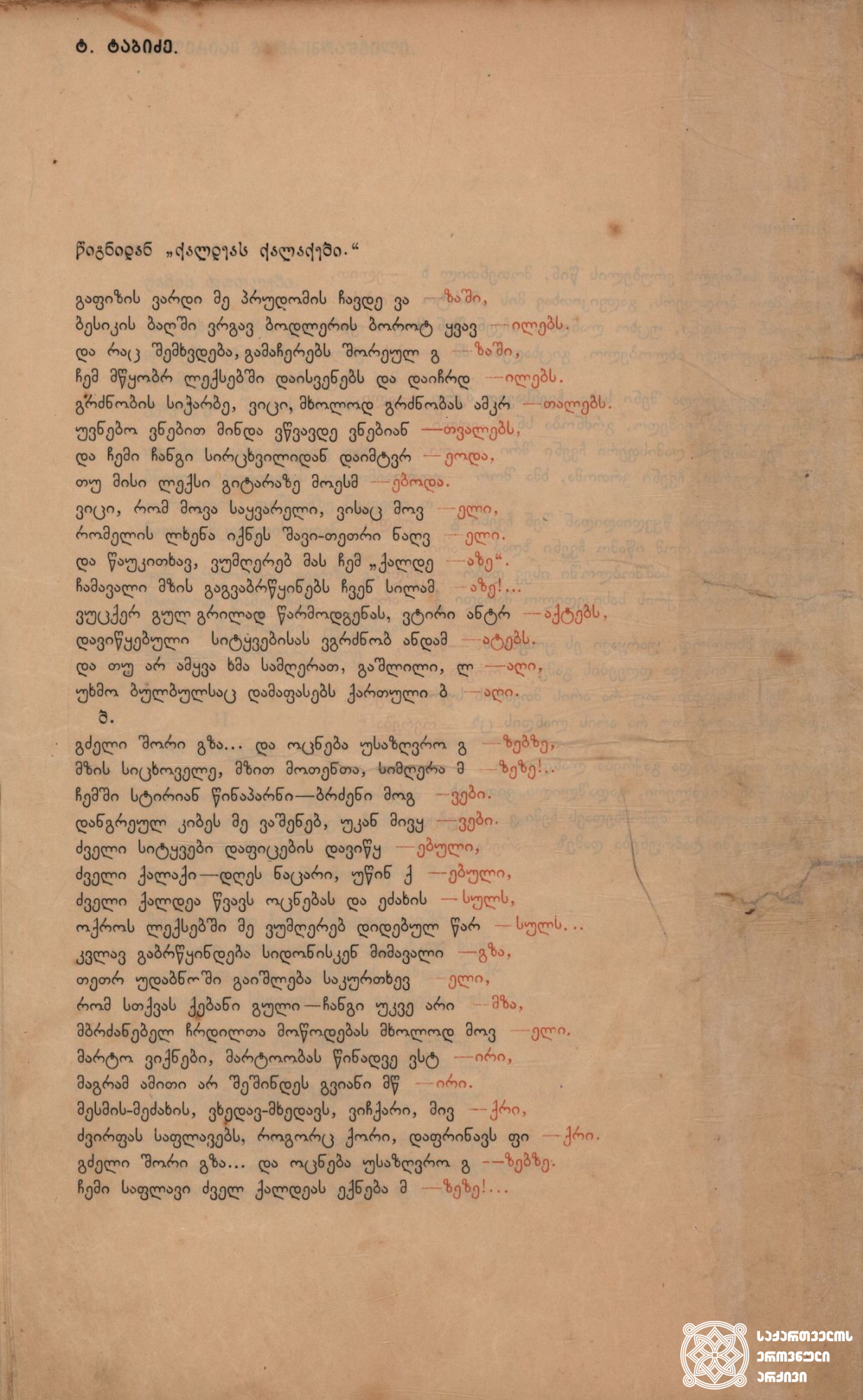
One of Titsian Tabidze's first poems was dedicated to the memory of his teacher, Meliton Chogovadze, a Georgian language pedagogue and publicist at the Kutaisi Gymnasium. The poem was published in the Kutaisi newspaper *Poni* in February 1910. From that time on, his poetic and prose works, as well as translations, were published in newspapers such as *Kolkhida*, *Sakhalkho Gazeti*, *Eri*, and *Teatri da Tskhovreba*.
In the photo: Titsian Tabidze's sketch 'Loneliness'. *Sakhalkho Gazeti*, July 31, 1910.
Titsian was still a student when he entered the literary arena. 'I started writing poems very early, from the 6th grade; my works were published first in Kutaisi, and then in Tbilisi newspapers.' From this period, he was also writing and publishing prose miniatures, sketches, studies, and short stories.
Titsian recalls that he met his friends — with whom he co-founded the 'Blue Horns' (Tsisperqantselebi) creative association of poets and prose writers in 1915 — at the Kutaisi Gymnasium: Paolo Iashvili, Valerian Gaprindashvili, Shalva Abkhaidze, Kolau Nadiradze, and others. 'At that time, teaching the Georgian language was relegated to the background, held only one day a week as a fifth or sixth lesson. However, underground literary circles flourished back then, and it was right there that we deepened our knowledge of our native language. What helped me especially was that in my childhood, I knew almost the entire Georgian Bible by heart.'
In 1913, Titsian continued his studies at Moscow University, in the Faculty of Philology. After completing his studies, he returned to his homeland.
In the photo: Titsian Tabidze as a student.
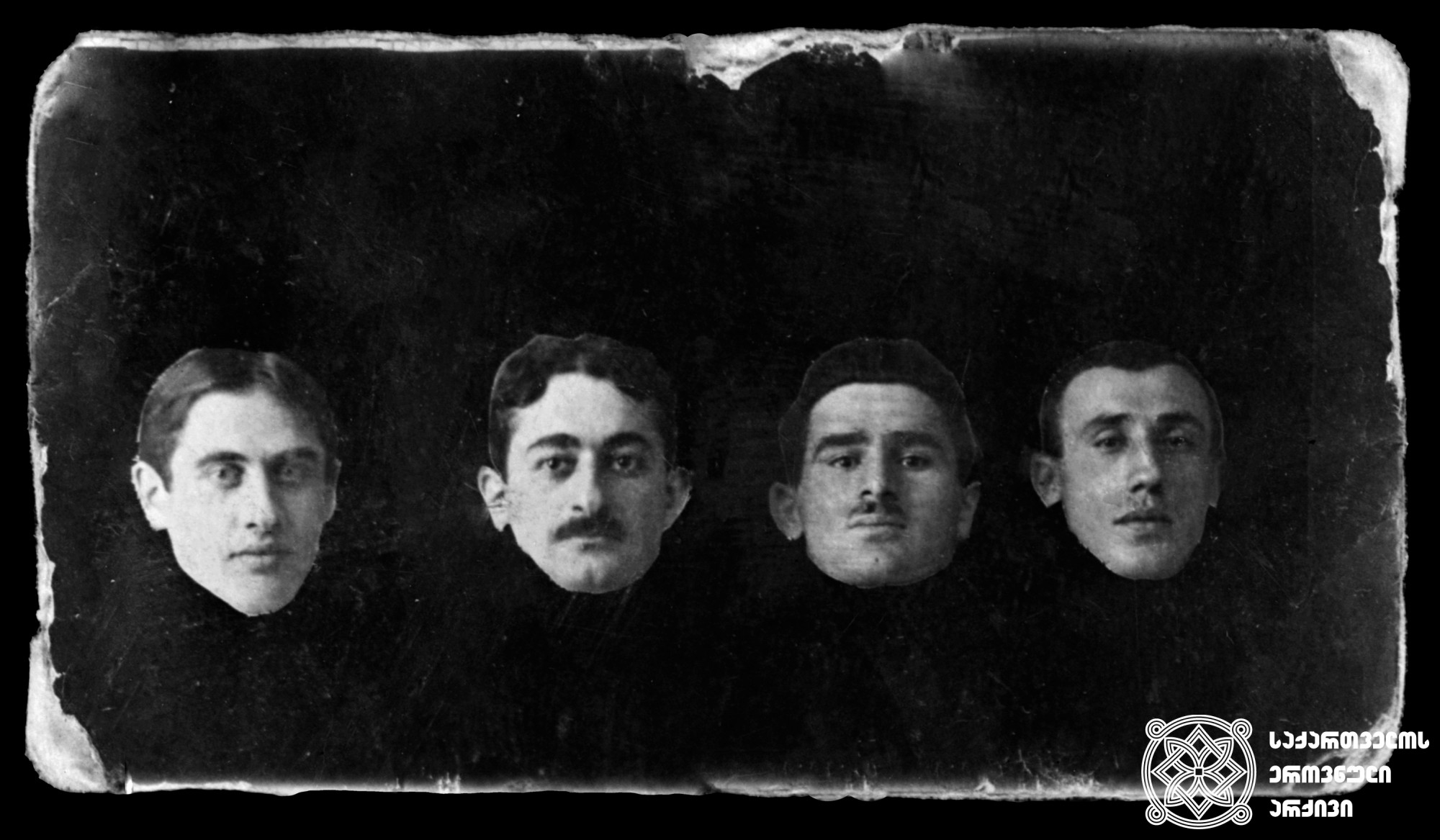
From left: Titsian Tabidze, Paolo Iashvili, Valerian Gaprindashvili, Kolau Nadiradze. Photocollage, 1916.
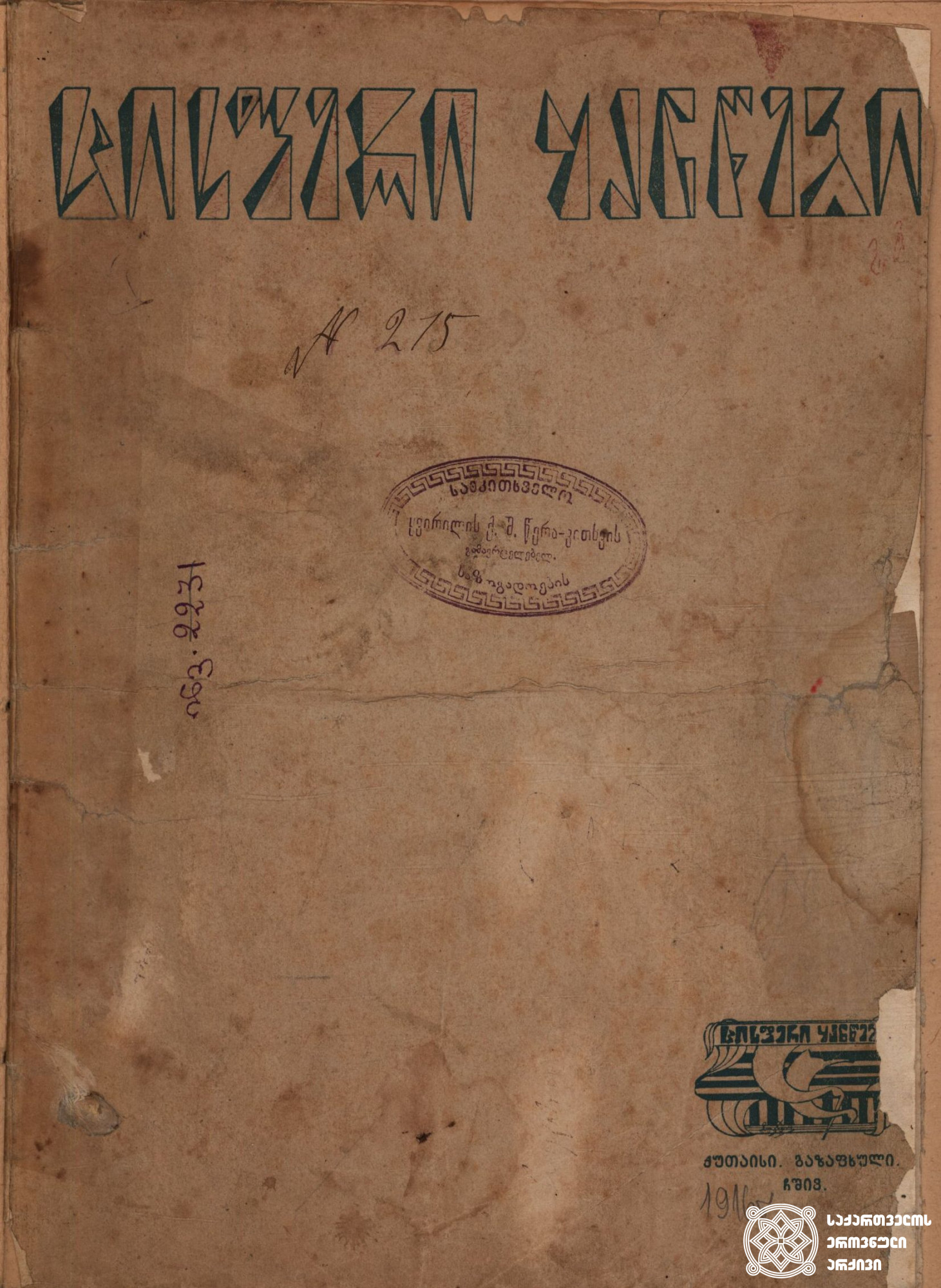
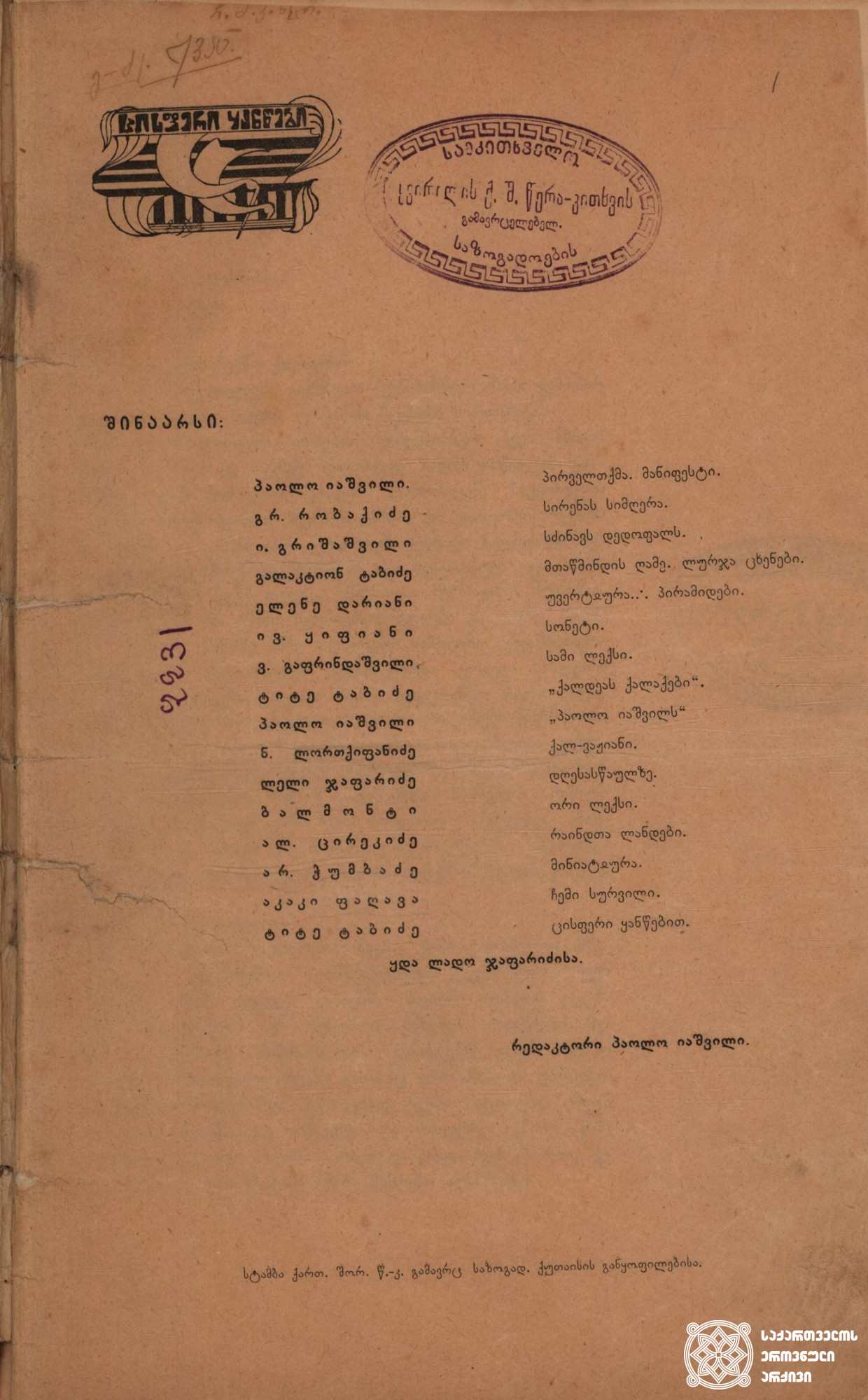
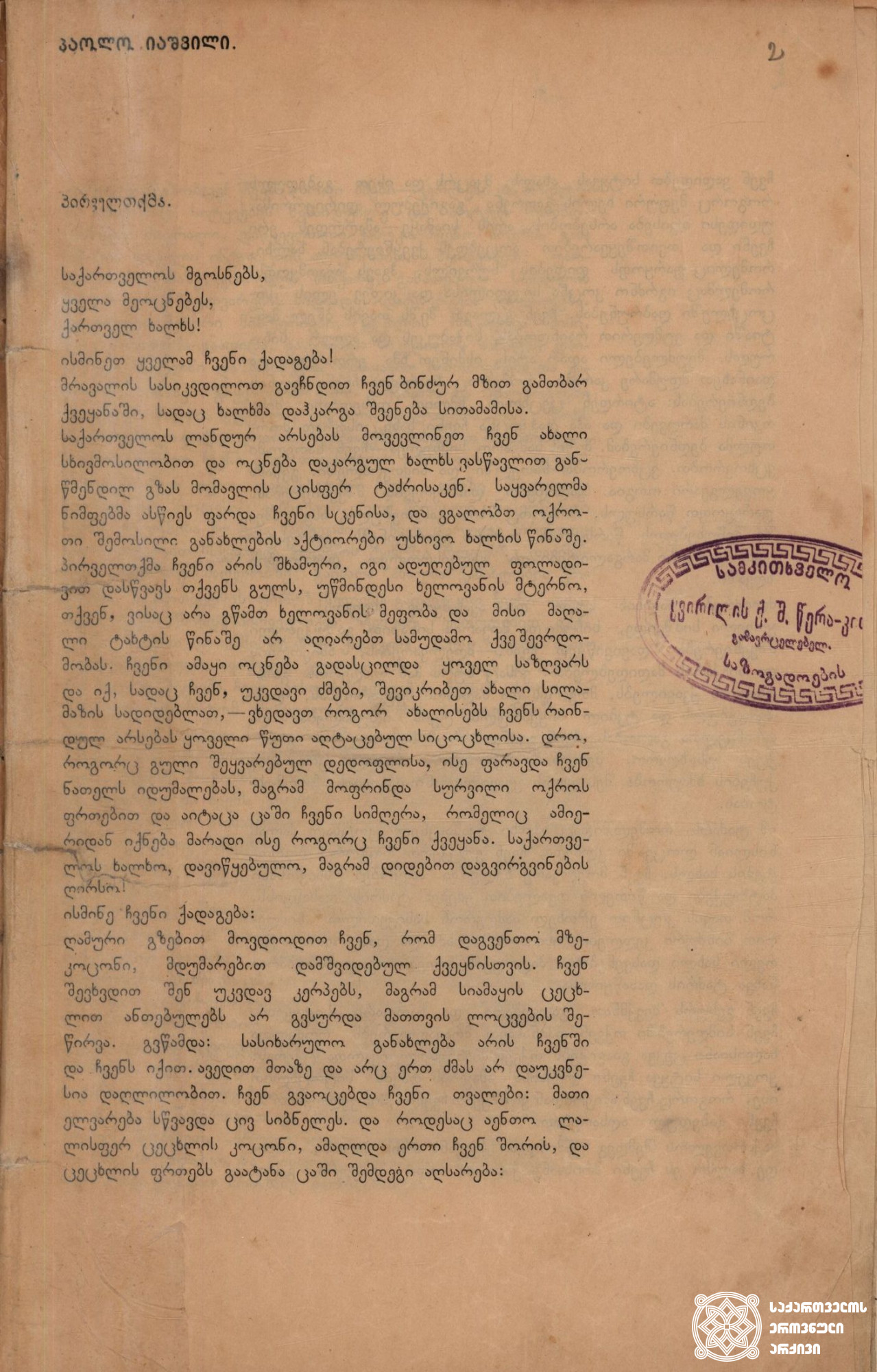
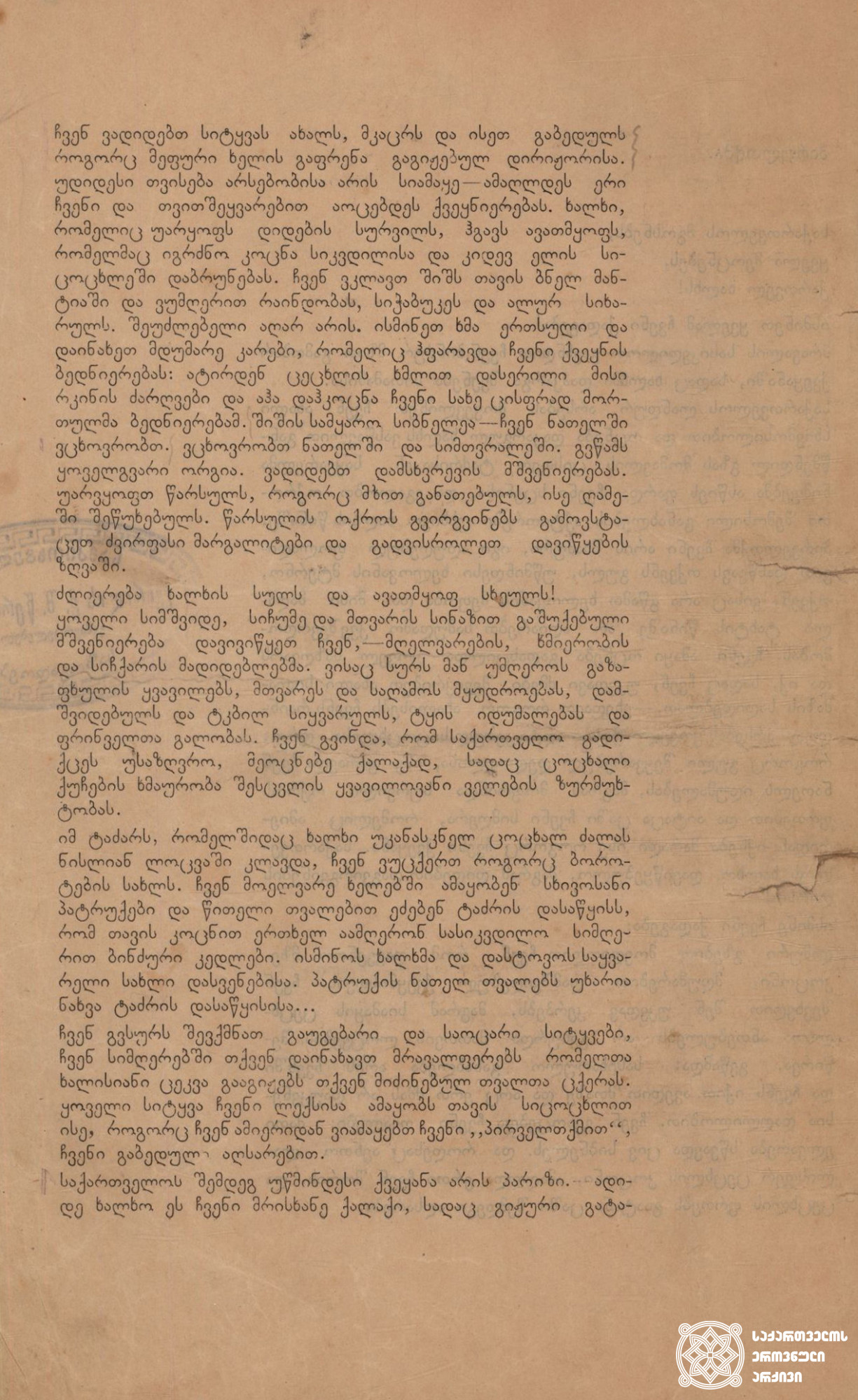
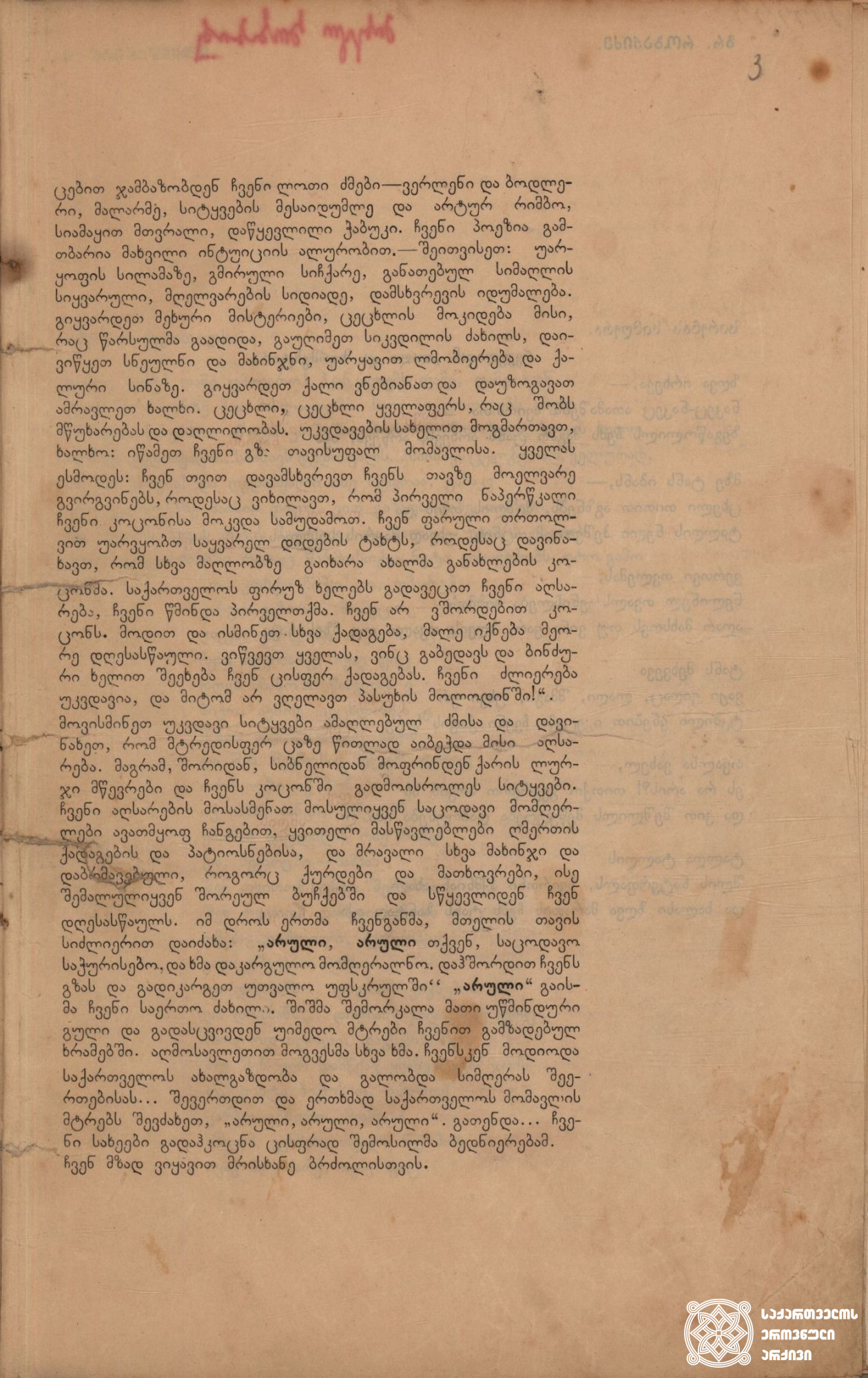
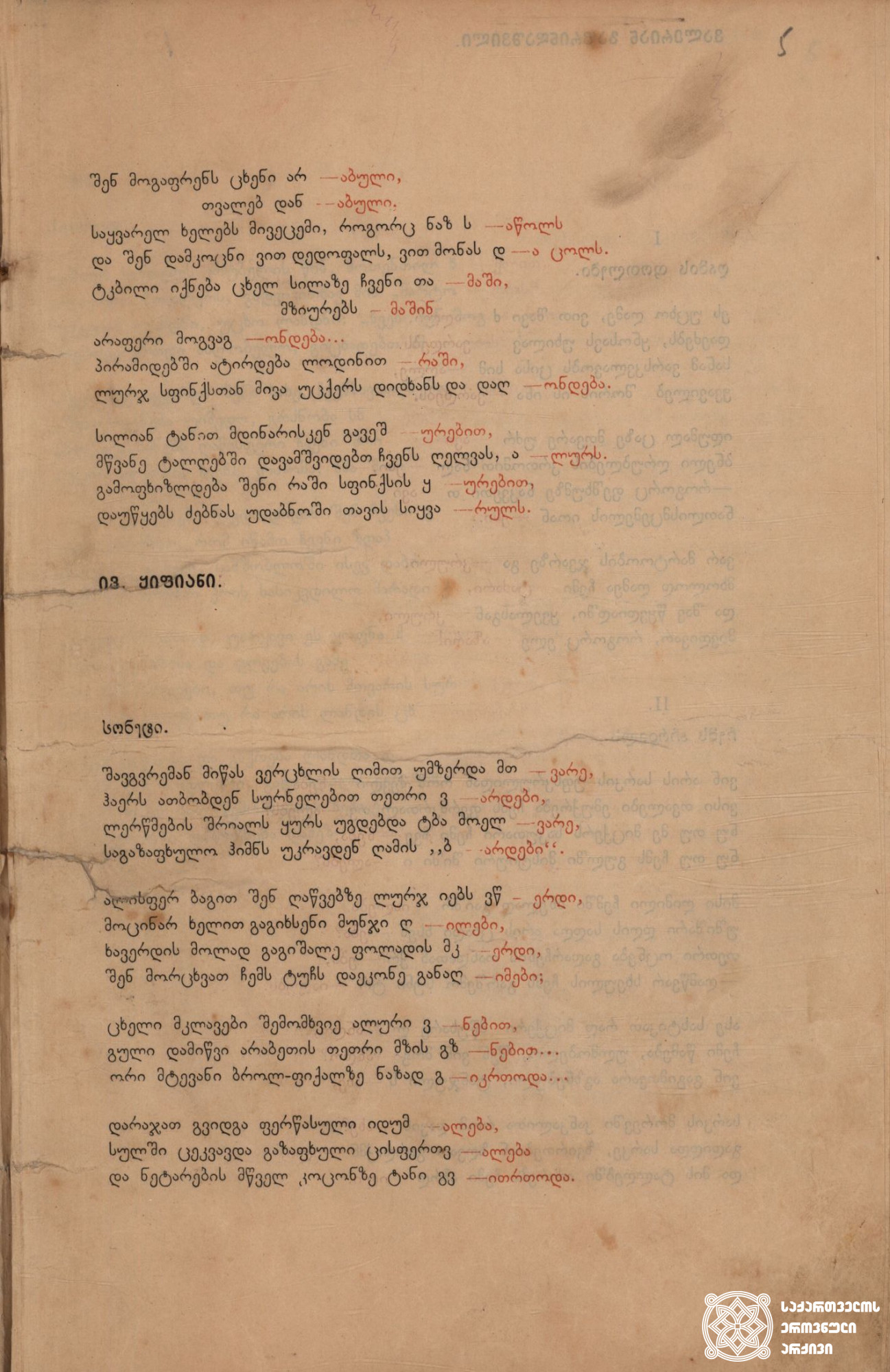
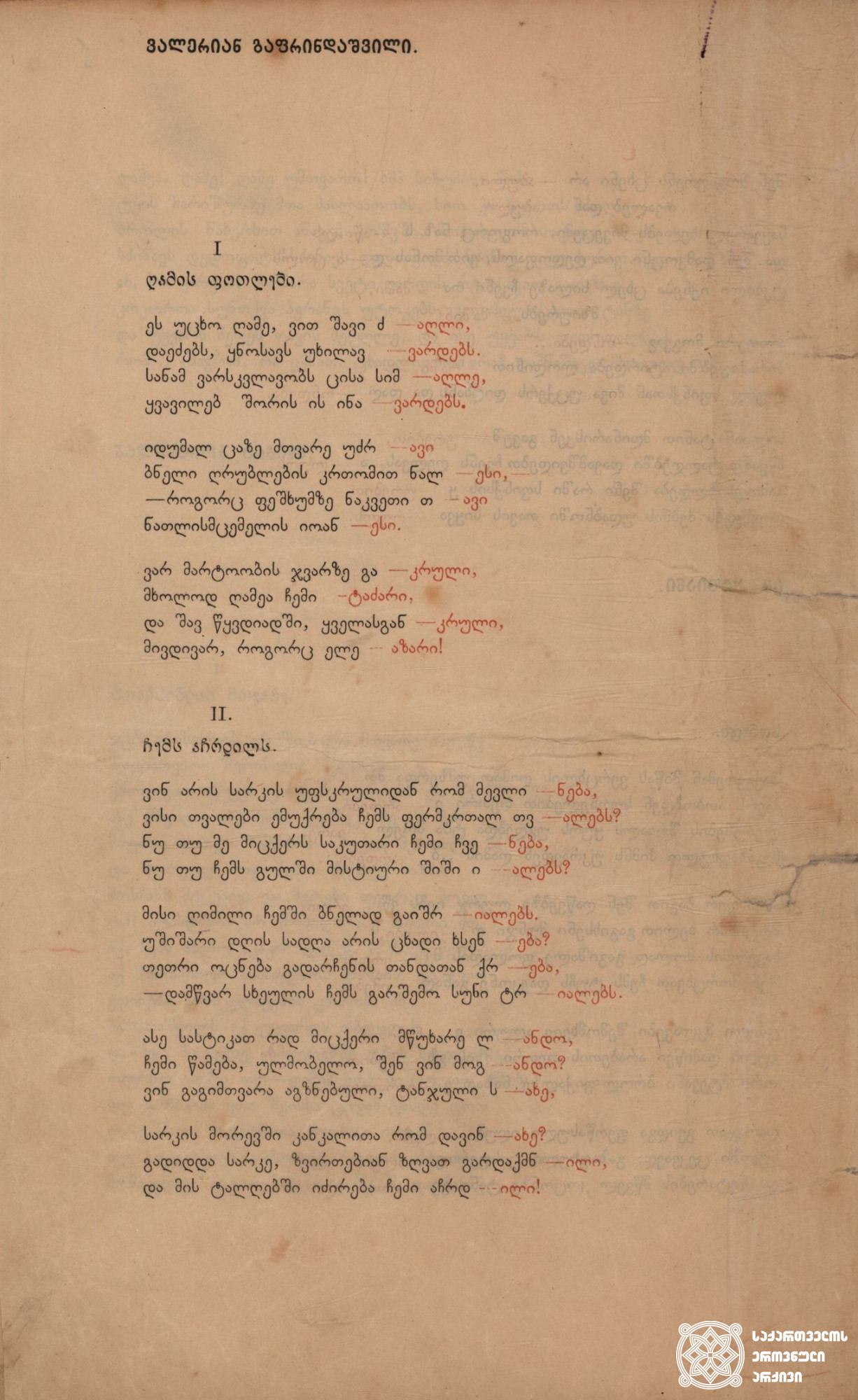
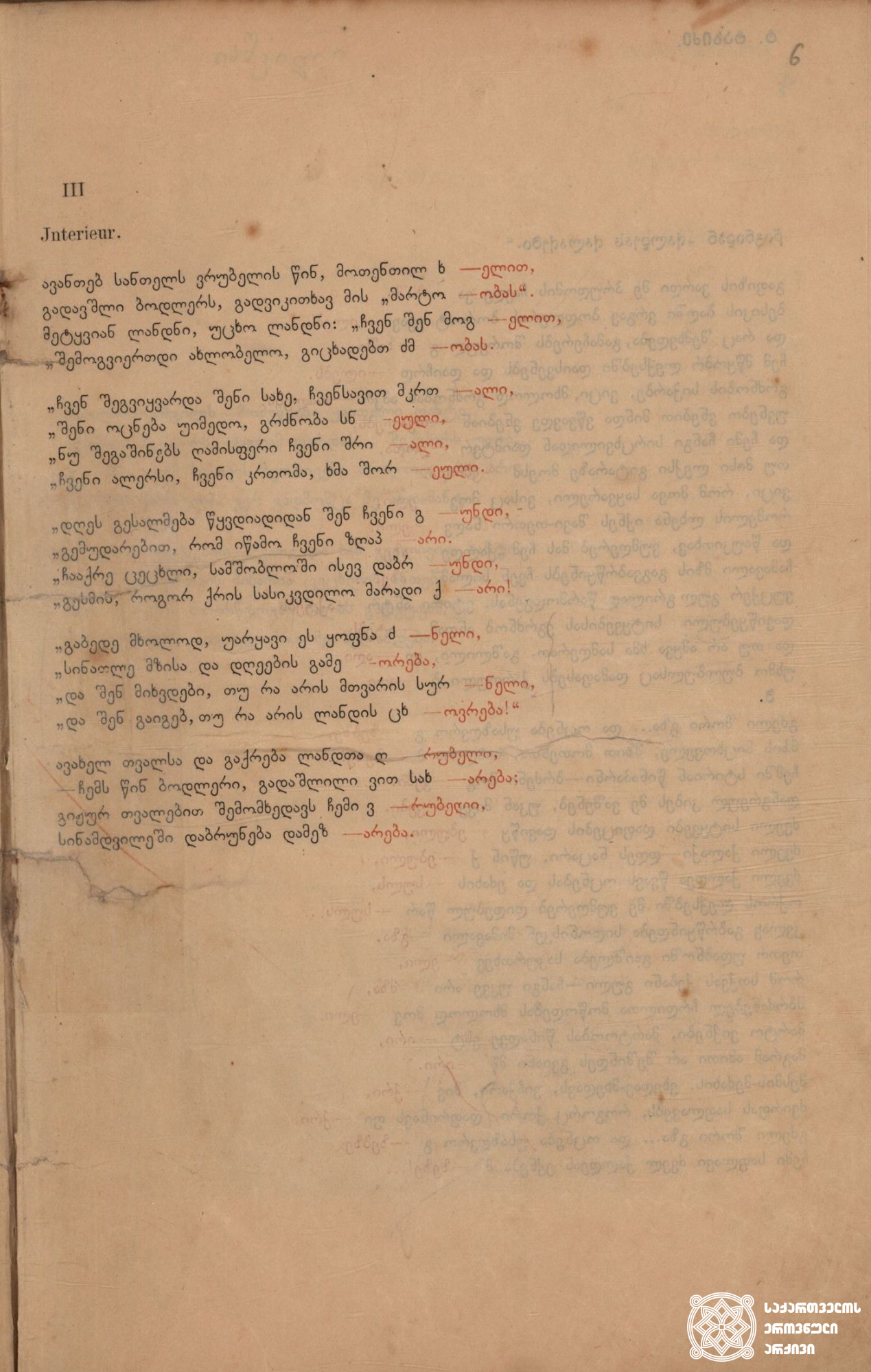
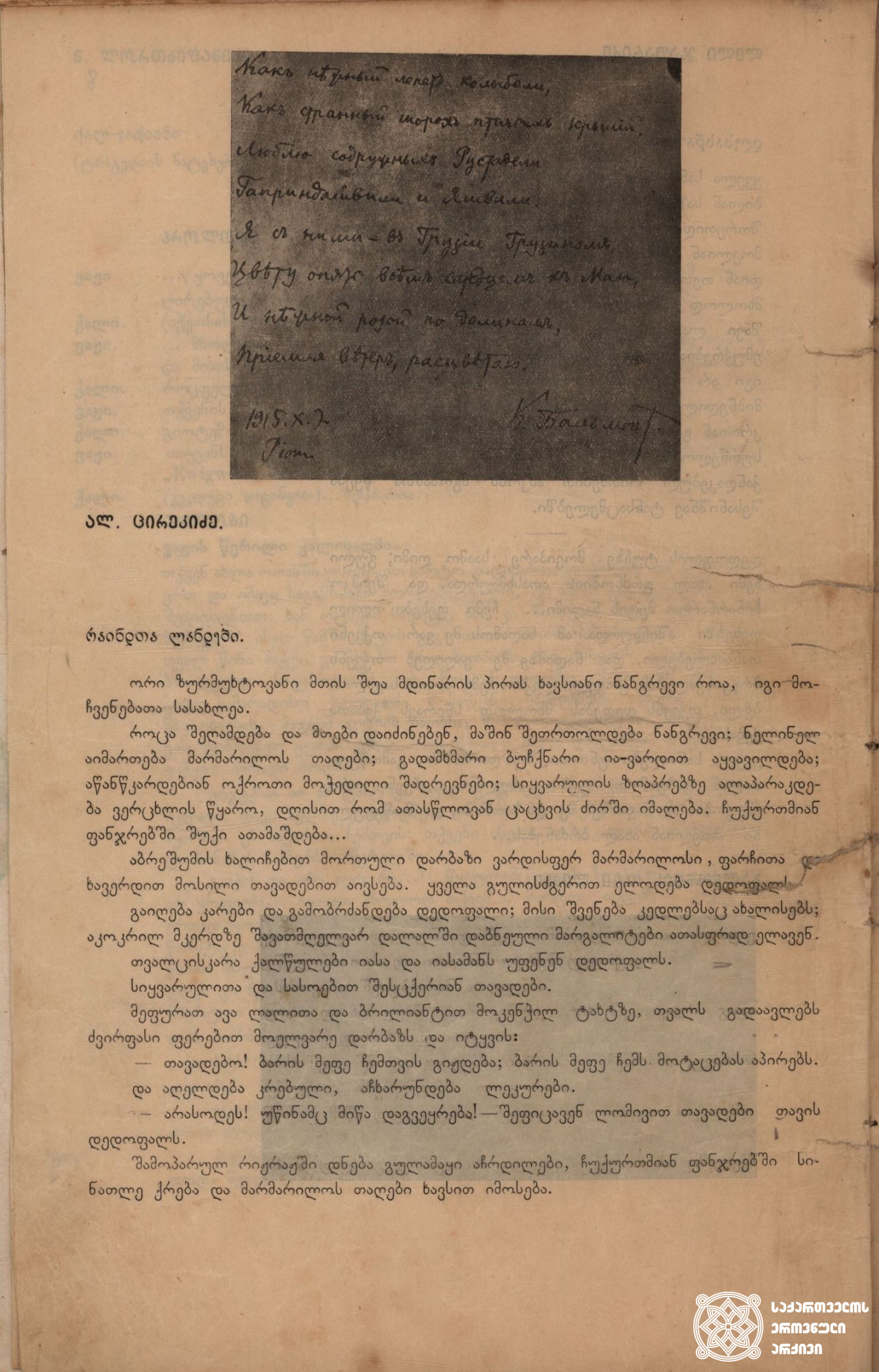
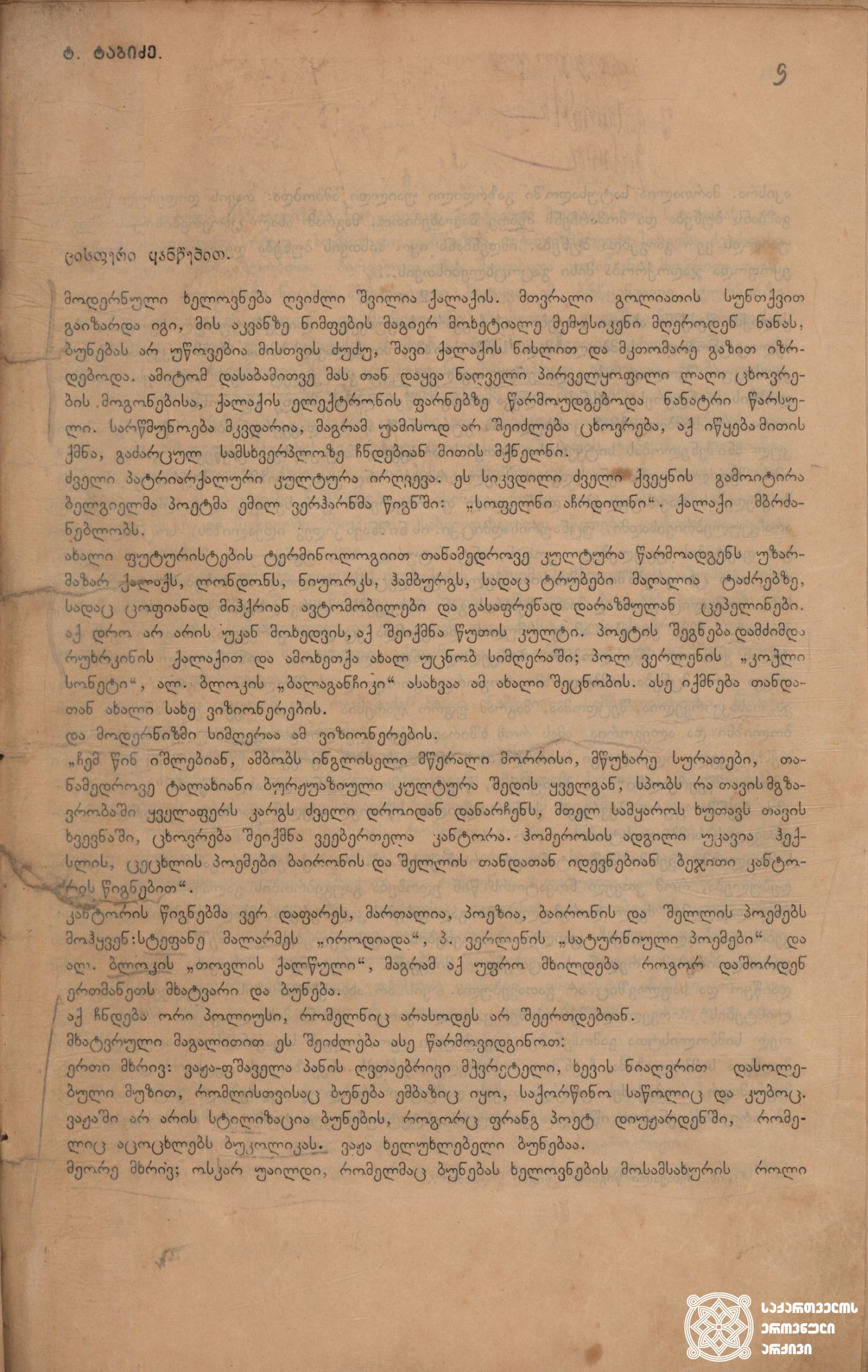
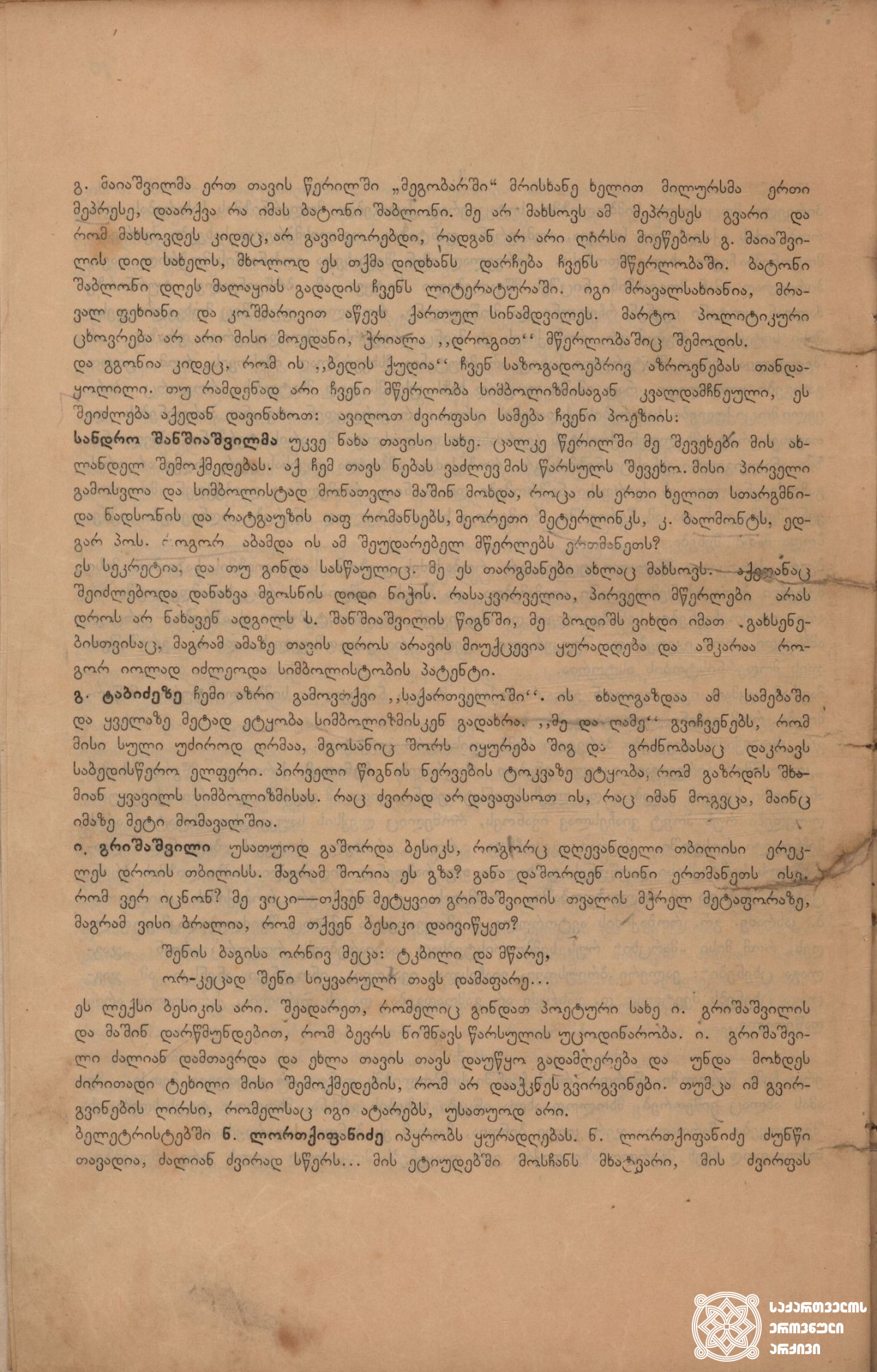
In 1916, the first journal of the Georgian Symbolists, Blue Horns (Tsisperi Qantsebi), was published in Kutaisi. In addition to being one of the founders of the Blue Horns literary order, Titsian Tabidze was also a leading theorist of Georgian Symbolist art. The very first issue of the journal featured his essay, “With the Blue Horns,” in which he explored questions of Modernist and Symbolist art:
„ცისფერი ყანწებით
მოდერნული ხელოვნება ღვიძლი შვილია ქალაქის. მთვრალი გოლიათის სუნთქვით გაიზარდა იგი, მის აკვანზე ნიმფების მაგიერ მოხეტიალე მემუსიკენი მღეროდენ ნანას, ბუნებას არ უწოვებია მისთვის ძუძუ, შავი ქალაქის ნისლით და მკთომარე გაზით იზრდებოდა. ამიტომ დასაბამითვე მას თან დაყვა ნაღველი პირველყოფილი ლაღი ცხოვრების მოგონებისა, ქალაქის ელექტრონის ფარნებზე წარმოუდგებოდა ნანატრი წარსული. სარწმუნოება მკვდარია, მაგრამ უამისოდ არ შეიძლება ცხოვრება, აქ იწყება მითის ქმნა, გაძარცულ სამსხვერპლოზე ჩნდებიან მითის მქნელნი.
ძველი პატრიარქალური კულტურა ირღვევა. ეს სიკვდილი ძველი ქვეყნის გამოიტირა ბელგიელმა პოეტმა ემილ ვერჰარნმა წიგნში: „სოფელნი აჩრდილნი“. ქალაქი მბრძანებლობს.
ახალი ფუტურისტების ტერმინოლოგიით თანამედროვე კულტურა წარმოადგენს უზარმაზარ ქალაქს, ლონდონს, ნიუორკს, ჰამბურგს, სადაც ტრუბები მაღალია ტაძრებზე, სადაც ცოფიანად მიჰქრიან ავტომობილები და გასაფრენად დარაზმულან ცეპელინები. აქ დრო არ არის უკან მოხედვის, აქ შეიქმნა წუთის კულტი. პოეტის შეგნება დამძიმდა რუხრკინის ქალაქით და ამოხეთქა ახალ უცნობ სიმღერაში; პოლ ვერლენის „კოჭლი სონეტი“, ალ. ბლოკის „ბალაგანჩიკი“ ასახვაა ამ ახალი შეცნობის. ასე იქმნება თანდათან ახალი სახე ვიზიონერების.
და მოდერნიზმი სიმღერაა ამ ვიზიონერების.
„ჩემ წინ იშლებიან, ამბობს ინგლისელი მწერალი მორრისი, მწუხარე სურათები, თანამედროვე ტალახიანი ბურჟუაზიული კულტურა შედის ყველგან, სპობს რა თავის მგზავრობაში ყველაფერს კარგს ძველი დროიდან დანარჩენს, მთელ სამყაროს ხუთავს თავის ხვევნაში, ცხოვრება შეიქმნა ვეებერთელა კანტორა. ჰომეროსის ადგილი უკავია ჰექსლის, ცეცხლის პოემები ბაირონის და შელლის თანდათან იდევნებიან ბეჯითი კანტორის წიგნებით“.
კანტორის წიგნებმა ვერ დაფარეს, მართალია, პოეზია, ბაირონის და შელლის პოემებს მოჰყვენ: სტეფანე მალარმეს „იროდიადა“, პ. ვერლენის „სატურნიული პოემები“ და აღ. ბლოკის „თოვლის ქალწული“, მაგრამ აქ უფრო მხილდება როგორ დაშორდენ ერთმანეთს მხატვარი და ბუნება.
აქ ჩნდება ორი პოლიუსი, რომელნიც არასოდეს არ შეერთდებიან.
მხატვრული მაგალითით ეს შეიძლება ასე წარმოვიდგინოთ:
ერთი მხრივ: ვაჟა-ფშაველა პანის ღვთაებრივი მჭვრეტელი, ხევის ნიაღვრით დასოლებული მუზით, რომლისთვისაც ბუნება ემბაზიც იყო, საქორწინო საწოლიც და კუბოც. ვაჟაში არ არის სტილიზაცია ბუნების, როგორც ფრანგ პოეტ დიუჟარდენში, რომელიც აცოცხლებს ბუკოლიკას. ვაჟა ხელუხლებელი ბუნებაა.
მეორე მხრივ; ოსკარ უაილდი, რომელმაც ბუნებას ხელოვნების მოსამსახურის როლი აკისრა. მართალია სატუსაღოში გაზრდილი უაილდი ამბობდა: თავის დიდებულ წყალში გამბანს ბუნება და მომარჩენს მწარე ბალახებითო, მაგრამ ახალ ცხოვრებისთვის ამდგარ უაილდს ვერ გაიგებდა ბუნება. იმდენხანს იყო მისთვის ბუნება დეკორაცია, რომ არ ეყოფოდა ჯადოქრობა მისი გაცოცხლებისთვის...
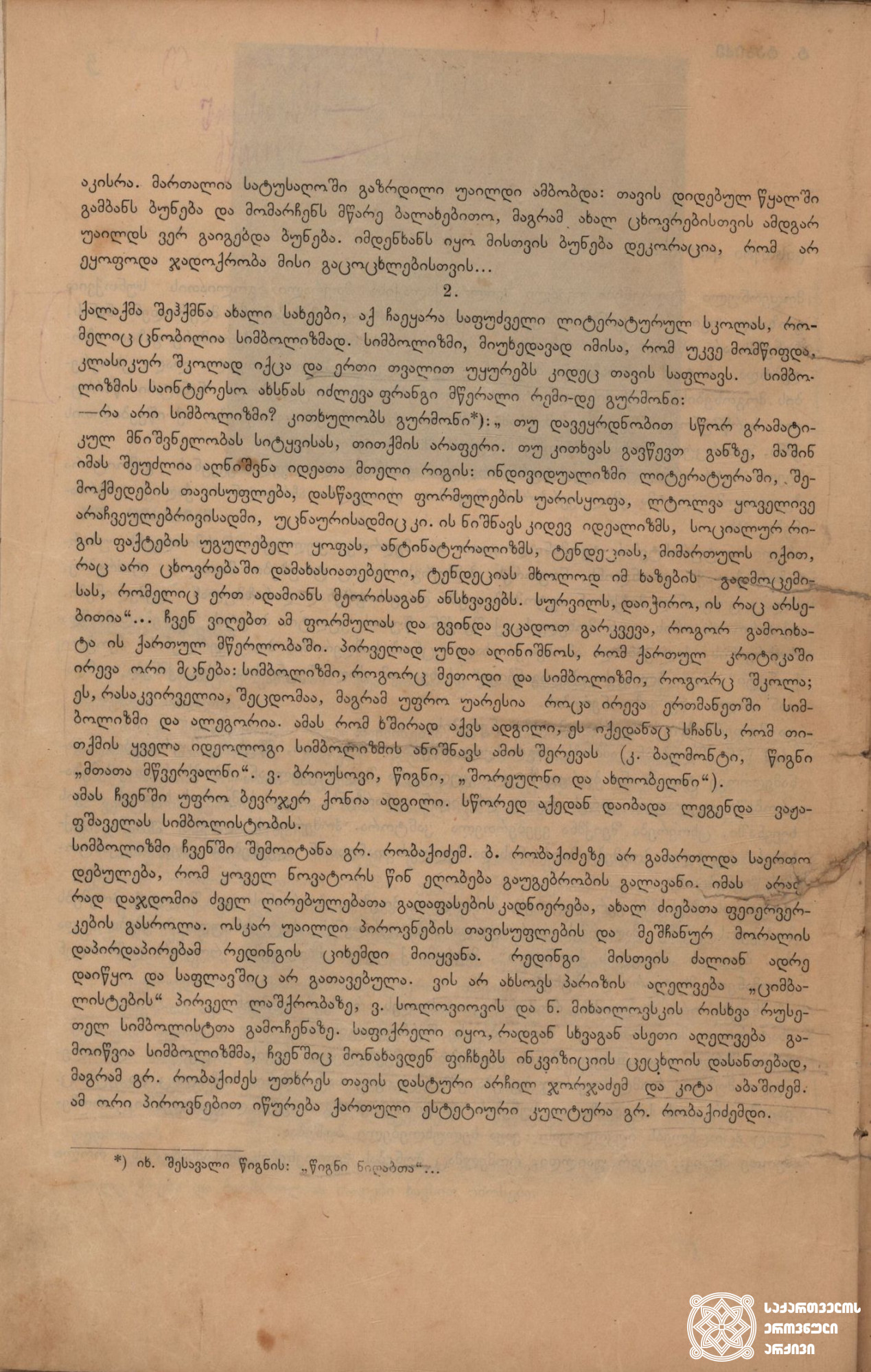
2.
ქალაქმა შეჰქმნა ახალი სახეები, აქ ჩაეყარა საფუძველი ლიტერატურულ სკოლას, რომელიც ცნობილია სიმბოლიზმად. სიმბოლიზმი, მიუხედავად იმისა, რომ უკვე მომწიფდა, კლასიკურ შკოლად იქცა და ერთი თვალით უყურებს კიდეც თავის საფლავს. სიმბოლიზმის საინტერესო ახსნას იძლევა ფრანგი მწერალი რემი-დე გურმონი:
- რა არი სიმბოლიზმი? კითხულობს გურმონი: „ თუ დავეყრდნობით სწორ გრამატიკულ მნიშვნელობას სიტყვისას, თითქმის არაფერი. თუ კითხვას გავწევთ განზე, მაშინ იმას შეუძლია აღნიშვნა იდეათა მთელი რიგის: ინდივიდუალიზმი ლიტერატურაში, შემოქმედების თავისუფლება, დასწავლილ ფორმულების უარისყოფა, ლტოლვა ყოველივე არაჩვეულებრივისადმი, უცნაურისადმიც კი. ის ნიშნავს კიდევ იდეალიზმს, სოციალურ რიგის ფაქტების უგულებელ ყოფას, ანტინატურალიზმს, ტენდეციას, მიმართულს იქით, რაც არი ცხოვრებაში დამახასიათებელი, ტენდეციას მხოლოდ იმ ხაზების გადმოცემისას, რომელიც ერთ ადამიანს მეორისაგან ანსხვავებს. სურვილს, დაიჭირო, ის რაც არსებითია“... ჩვენ ვიღებთ ამ ფორმულას და გვინდა ვცადოთ გარკვევა, როგორ გამოიხატა ის ქართულ მწერლობაში. პირველად უნდა აღინიშნოს, რომ ქართულ კრიტიკაში ირევა ორი მცნება: სიმბოლიზმი, როგორც მეთოდი და სიმბოლიზმი, როგორც შკოლა; ეს, რასაკვირველია, შეცდომაა, მაგრამ უფრო უარესია როცა ირევა ერთმანეთში სიმბოლიზმი და ალეგორია. ამას რომ ხშირად აქვს ადგილი, ეს იქედანაც სჩანს, რომ თითქმის ყველა იდეოლოგი სიმბოლიზმის ანიშნავს ამის შერევას (კ. ბალმონტი, წიგნი „მთათა მწვერვალნი“. ვ. ბრიუსოვი, წიგნი, „შორეულნი და ახლობელნი“).
ამას ჩვენში უფრო ბევრჯერ ქონია ადგილი. სწორედ აქედან დაიბადა ლეგენდა ვაჟა-ფშაველას სიმბოლისტობის.
სიმბოლიზმი ჩვენში შემოიტანა გრ. რობაქიძემ. ბ. რობაქიძეზე არ გამართლდა საერთო დებულება, რომ ყოველ ნოვატორს წინ ეღობება გაუგებრობის გალავანი. იმას არაფრად დაჯდომია ძველ ღირებულებათა გადაფასების კადნიერება, ახალ ძიებათა ფეიერვერკების გასროლა. ოსკარ უაილდი პიროვნების თავისუფლების და მეშჩანურ მორალის დაპირდაპირებამ რედინგის ციხემდი მიიყვანა. რედინგი მისთვის ძალიან ადრე დაიწყო და საფლავშიც არ გათავებულა. ვის არ ახსოვს პარიზის აღელვება „ციმბალისტების“ პირველ ლაშქრობაზე, ვ. სოლოვიოვის და ნ. მიხაილოვსკის რისხვა რუსეთელ სიმბოლისტთა გამოჩენაზე. საფიქრელი იყო, რადგან სხვაგან ასეთი აღელვება გამოიწვია სიმბოლიზმმა, ჩვენშიც მონახავდენ ფიჩხებს ინკვიზიციის ცეცხლის დასანთებად, მაგრამ გრ. რობაქიძეს უთხრეს თავის დასტური არჩილ ჯორჯაძემ და კიტა აბაშიძემ. ამ ორი პიროვნებით იწურება ქართული ესტეტიური კულტურა გრ. რობაქიძემდი.
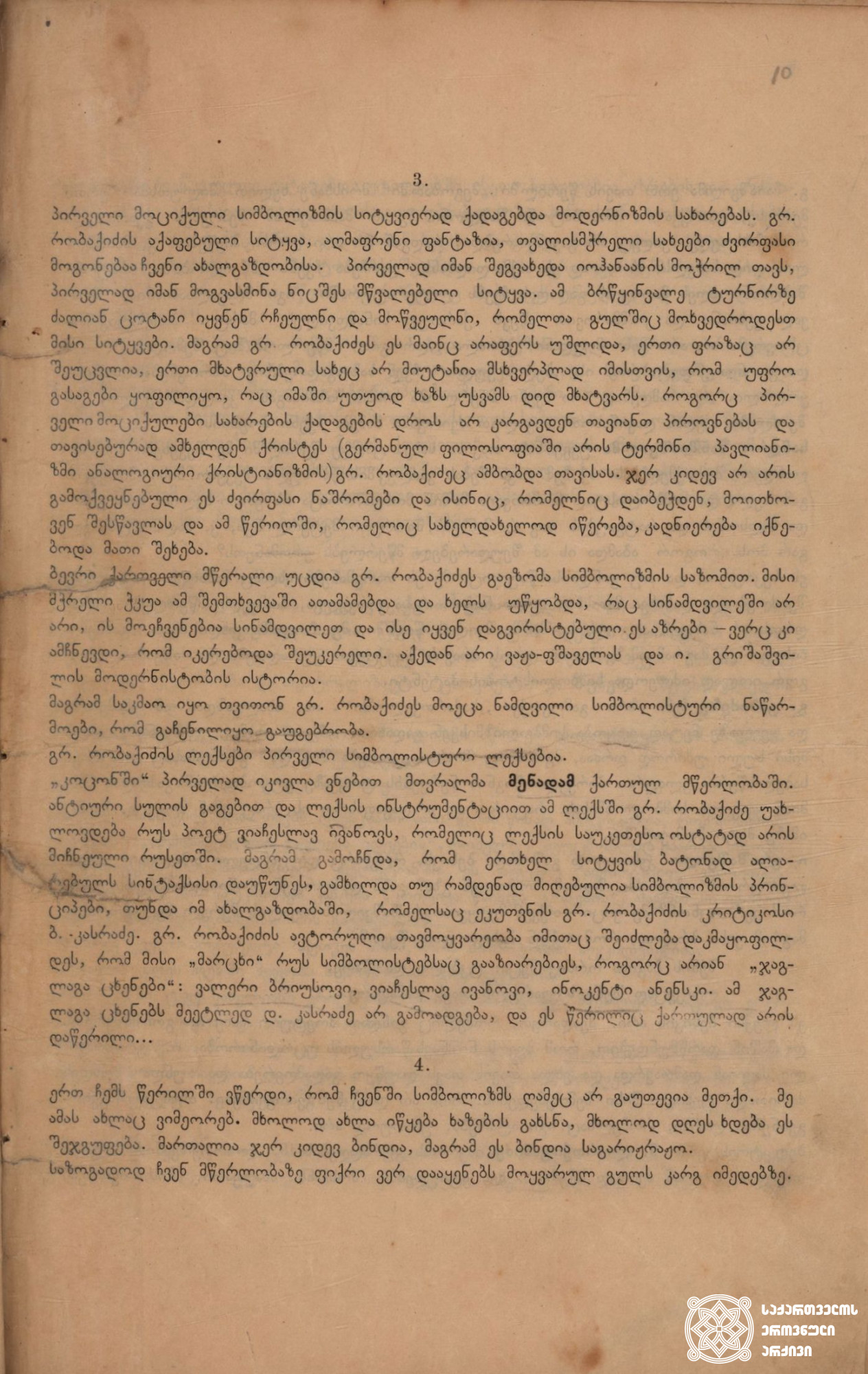
3.
პირველი მოციქული სიმბოლიზმის სიტყვიერად ქადაგებდა მოდერნიზმის სახარებას. გრ. რობაქიძის აქაფებული სიტყვა, აღმაფრენი ფანტაზია, თვალისმჭრელი სახეები ძვირფასი მოგონებაა ჩვენი ახალგაზდობისა. პირველად იმან შეგვახედა იოჰანაანის მოჭრილ თავს, პირველად. იმან მოგვასმინა ნიცშეს მწვალებელი სიტყვა. ამ ბრწყინვალე ტურნირზე ძალიან ცოტანი იყვნენ რჩეულნი და მოწვეულნი, რომელთა გულშიც მოხვედროდესთ მისი სიტყვები. მაგრამ გრ. რობაქიძეს ეს მაინც არაფერს უშლიდა, ერთი ფრაზაც არ შეუცვლია, ერთი მხატვრული სახეც არ მიუტანია მსხვერპლად იმისთვის, რომ უფრო გასაგები ყოფილიყო, რაც იმაში უთუოდ ხაზს უსვამს დიდ მხატვარს. როგორც პირველი მოციქულები სახარების ქადაგების დროს არ კარგავდენ თავიანთ პიროვნებას და თავისებურად ამხელდენ ქრისტეს (გერმანულ ფილოსოფიაში არის ტერმინი პავლიანიზმი ანალოგიური ქრისტიანიზმის) გრ. რობაქიძეც ამბობდა თავისას. ჯერ კიდევ არ არის გამოქვეყნებული ეს ძვირფასი ნაშრომები და ისინიც, რომელნიც დაიბეჭდენ, მოითხოვენ შესწავლას და ამ წერილში, რომელიც სახელდახელოდ იწერება, კადნიერება იქნებოდა მათი შეხება.
ბევრი ქართველი მწერალი უცდია გრ. რობაქიძეს გაეზომა სიმბოლიზმის საზომით. მისი მჭრელი ჭკუა ამ შემთხვევაში ათამამებდა და ხელს უწყობდა, რაც სინამდვილეში არ არი, ის მოეჩვენებია სინამდვილეთ და ისე იყვენ დაგვირისტებული ეს აზრები - ვერც კი ამჩნევდი, რომ იკერებოდა შეუკერელი. აქედან არი ვაჟა-ფშაველას და ი. გრიშაშვილის მოდერნისტობის. ისტორია.
მაგრამ საკმაო იყო თვითონ გრ. რობაქიძეს მოეცა ნამდვილი სიმბოლისტური ნაწარმოები, რომ გაჩენილიყო გაუგებრობა.
გრ. რობაქიძის ლექსები პირველი სიმბოლისტური ლექსებია.
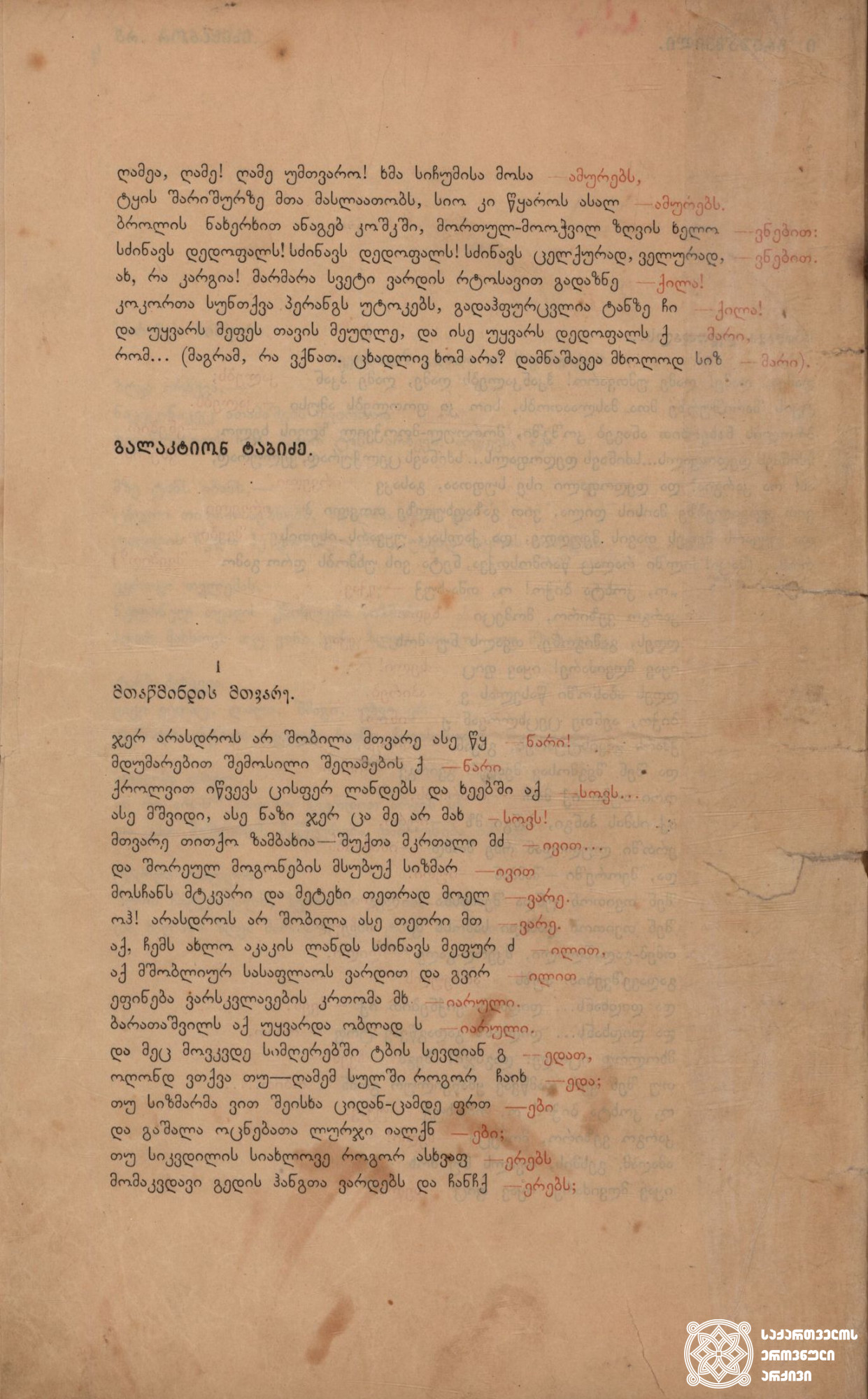
„კოცონში“ პირველად იკივლა ვნებით მთვრალმა მენადამ ქართულ მწერლობაში. ანტიური სულის გაგებით და ლექსის ინსტრუმენტაციით ამ ლექსში გრ. რობაქიძე უახლოვდება რუს პოეტ ვიაჩესლავ ივანოვს, რომელიც ლექსის საუკეთესო ოსტატად არის მიჩნეული რუსეთში. მაგრამ გამოჩნდა, რომ ერთხელ სიტყვის ბატონად აღიარებულს სინტაქსისი დაუწუნეს, გამხილდა თუ რამდენად მიღებულია სიმბოლიზმის პრინციპები, თუნდა იმ ახალგაზდობაში, რომელსაც ეკუთვნის გრ. რობაქიძის კრიტიკოსი ბ. კასრაძე. გრ. რობაქიძის ავტორული თავმოყვარეობა იმითაც შეიძლება დაკმაყოფილდეს, რომ მისი „მარცხი“ რუს სიმბოლისტებსაც გააზიარებიეს, როგორც არიან „ჯაგლაგა ცხენები“: ვალერი ბრიუსოვი, ვიაჩესლავ ივანოვი, ინოკენტი ანენსკი. ამ ჯაგლაგა ცხენებს მეეტლედ დ. კასრაძე არ გამოადგება, და ეს წერილიც ქართულად არის დაწერილი...
4.
ერთ ჩემს წერილში ვწერდი, რომ ჩვენში სიმბოლიზმს ღამეც არ გაუთევია მეთქი. მე ამას ახლაც ვიმეორებ. მხოლოდ ახლა იწყება ხაზების გახსნა, მხოლოდ დღეს ხდება ეს შეჯგუფება. მართალია ჯერ კიდევ ბინდია, მაგრამ ეს ბინდია საგარიჟრაჟო.
საზოგადოდ ჩვენ მწერლობაზე ფიქრი ვერ დააყენებს მოყვარულ გულს კარგ იმედებზე.
გ. მაიაშვილმა ერთ თავის წერილში „მეგობარში“ მრისხანე ხელით მილურსმა ერთი მეპრესე, დაარქვა რა იმას ბატონი შაბლონი. მე არ მახსოვს ამ მეპრესეს გვარი და რომ მახსოვდეს კიდეც, არ გავიმეორებდი, რადგან არ არი ღირსი მიეწებოს გ. მაიაშვილის დიდ სახელს, მხოლოდ ეს თქმა დიდხანს დარჩება ჩვენს მწერლობაში. ბატონი შაბლონი დღეს მალაყიას გადადის ჩვენს ლიტერატურაში. იგი მრავალსახიანია, მრავალ ფეხიანი და კოშმარივით აწევს ქართულ სინამდვილეს. მარტო პოლიტიკური ცხოვრება არ არი მისი მოედანი, ჭრიალა დროგით“ მწერლობაშიც შემოდის.
და გგონია კიდეც, რომ ის „ბედის ქუდია. ჩვენ საზოგადოებრივ აზროვნებას თანდაყოლილი. თუ რამდენად არი ჩვენი მწერლობა სიმბოლიზმისაგან კვალდამჩნეული, ეს შეიძლება აქედან დავინახოთ: ავიღოთ ძვირფასი სამება ჩვენი პოეზიის:
სანდრო შანშიაშვილმა უკვე ნახა თავისი სახე. ცალკე წერილში მე შევეხები მის ახლანდელ შემოქმედებას. აქ ჩემ თავს ნებას ვაძლევ მის წარსულს შევეხო. მისი პირველი გამოსვლა და სიმბოლისტად მონათვლა მაშინ მოხდა, როცა ის ერთი ხელით სთარგმნიდა ნადსონის და რატგაუზის იაფ რომანსებს, მეორეთი მეტერლინკს, კ. ბალმონტს, ედგარ პოს. როგორ აბამდა ის ამ შეუდარებელ მწერლებს ერთმანეთს?
ეს სეკრეტია, და თუ გინდა სასწაულიც. მე ეს თარგმანები. ახლაც მახსოვს. აქედანაც შეიძლებოდა დანახვა მგოსნის დიდი ნიჭის. რასაკვირველია, პირველი მწერლები არასდროს არ ნახავენ ადგილს ს. შანშიაშვილის წიგნში, მე ბოდიშს ვიხდი იმათ გახსენებისთვისაც, მაგრამ ამაზე თავის დროს არავის მიუქცევია ყურადღება და აშკარაა როგორ იოლად იძლეოდა სიმბოლისტობის პატენტი.
გ. ტაბიძეზე ჩემი აზრი გამოვთქვი „საქართველოში“. ის ახალგაზდაა ამ სამებაში და ყველაზე მეტად ეტყობა სიმბოლიზმისკენ გადახრა. „მე და ღამე“ გვიჩვენებს, რომ მისი სული უძიროდ ღრმაა, მგოსანიც შორს იყურება შიგ და გრძნობასაც დაკრავს საბედისწერო ელფერი. პირველი წიგნის ნერვების ტოკვაზე ეტყობა, რომ გაზრდის შხამიან ყვავილს სიმბოლიზმისას. რაც ძვირად არ დავაფასოთ ის, რაც იმან მოგვცა, მაინც იმაზე მეტი მომავალშია.
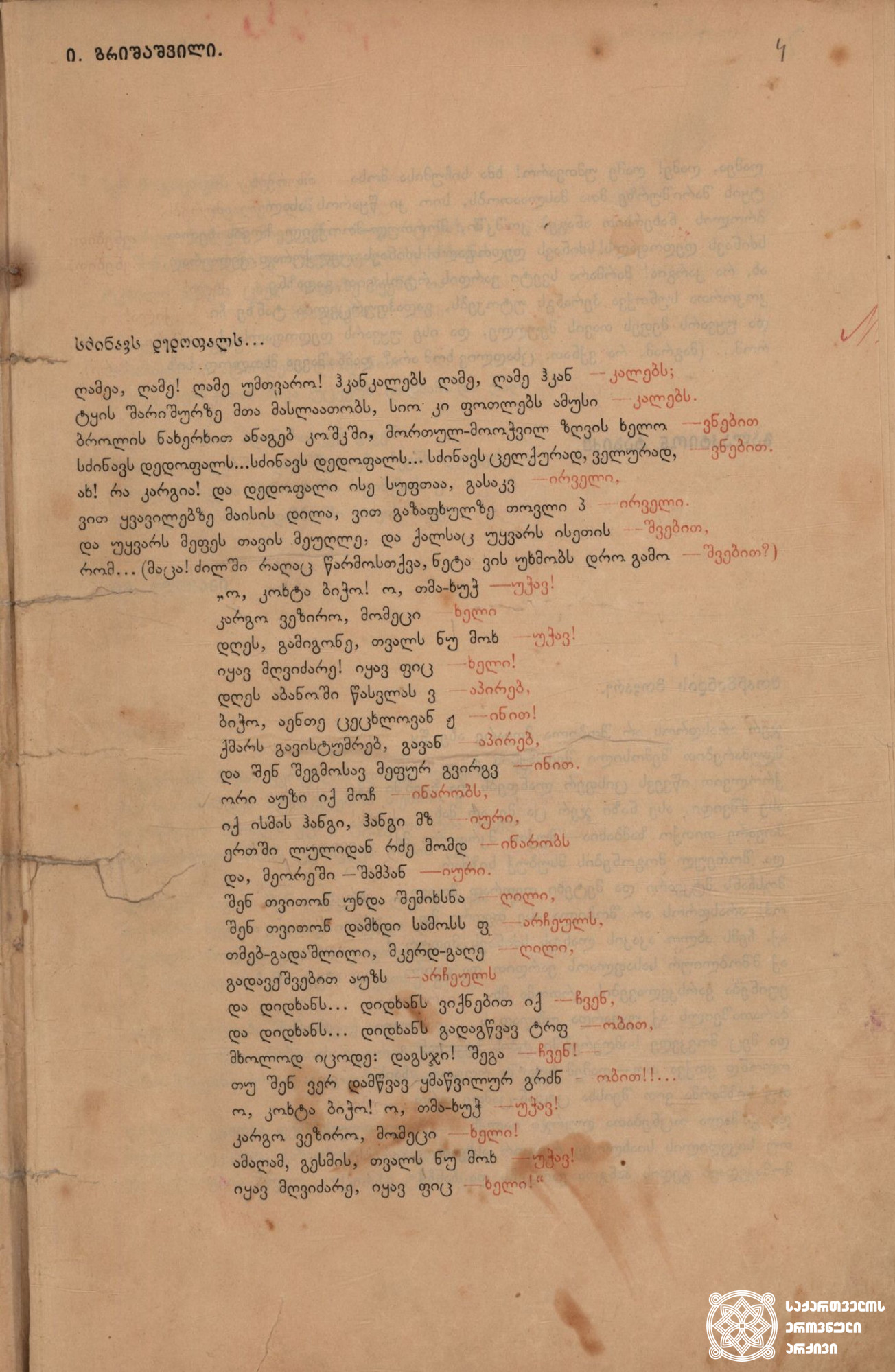
ი. გრიშაშვილი უსათუოდ გაშორდა ბესიკს, როგორც დღევანდელი თბილისი ერეკლეს დროის თბილისს. მაგრამ შორია ეს გზა? განა დაშორდენ ისინი ერთმანეთს ისე, რომ ვერ იცნონ? მე ვიცი - თქვენ მეტყვით გრიშაშვილის თვალის მჭრელ მეტაფორაზე, მაგრამ ვისი ბრალია, რომ თქვენ ბესიკი დაივიწყეთ?
შენის ბაგისა ორნივ მეცა: ტკბილი და მწარე,
ორ-კეცად შენი სიყვარული თავს დამაფარე...
ეს ლექსი ბესიკის არი. შეადარეთ, რომელიც გინდათ პოეტური სახე ი. გრიშაშვილის და მაშინ დარწმუნდებით, რომ ბევრს ნიშნავს წარსულის უცოდინარობა. ი. გრიშაშვილი ძალიან დამთავრდა და ეხლა თავის თავს დაუწყო გადამღერება და უნდა მოხდეს ძირითადი ტეხილი მისი შემოქმედების, რომ არ დააჭკნეს გვირგვინები. თუმცა იმ გვირგვინების ღირსი, რომელსაც იგი ატარებს, უსათუოდ არი.
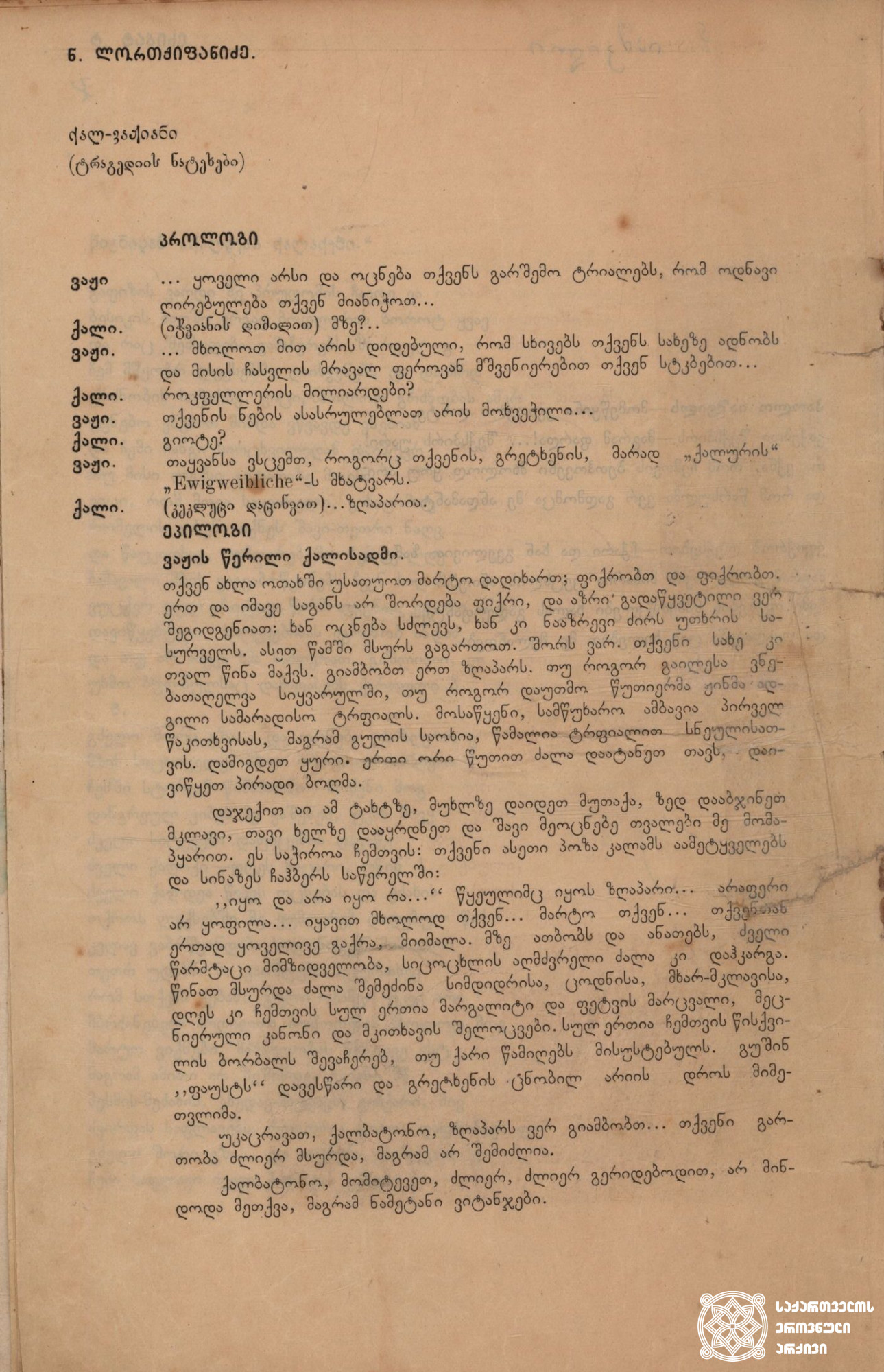
ბელეტრისტებში ნ. ლორთქიფანიძე იპყრობს ყურადღებას. ნ. ლორთქიფანიძე ძუნწი თავადია, ძალიან ძვირად სწერს... მის ეტიუდებში მოსჩანს მხატვარი, მის ძვირფას ოფორტებს ჩვენ გულით ვატარებთ. ეტიუდებში ისეთი ხვეულებია აზრების და გრძნობების, ისეთი გადასავალი ტრაგიულის გულუბრყვილოზე, ხანდისხან დოსტოევსკისებური ავხორცობაც, რომ გრძნობ ჯადოქარის ხელსა და გინდა რომ დახაზოს დიდი სურათი, რომლის დახატვა ჯერ მარტო იმას შეუძლია. არის აგრეთვე ჭუმბაძე და სხვები, მაგრამ არ არის არც ერთი მწერალი, რომელიც ასახავდეს. უნაკლულოდ სიმბოლიზმის „L'art Poetique "...
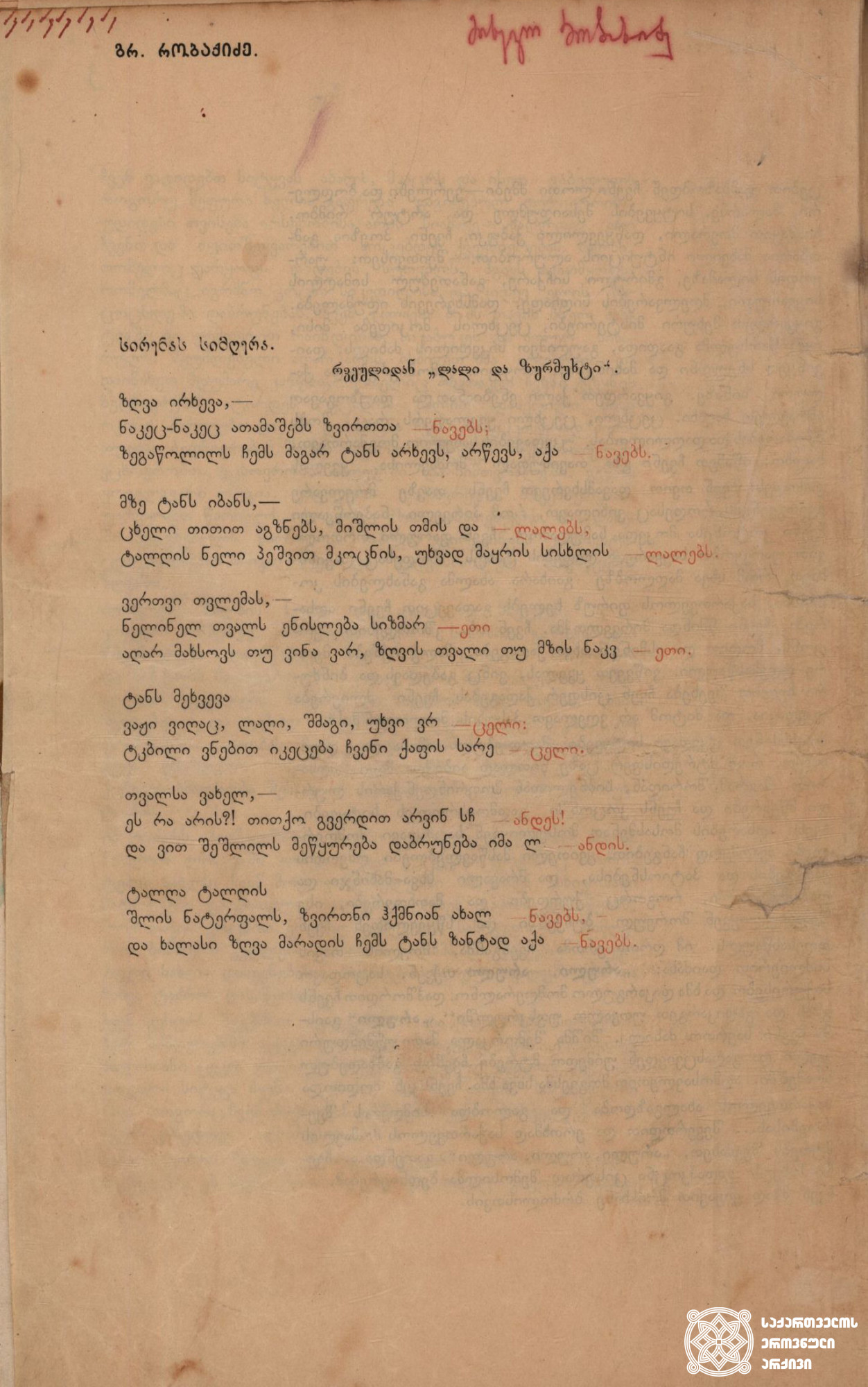
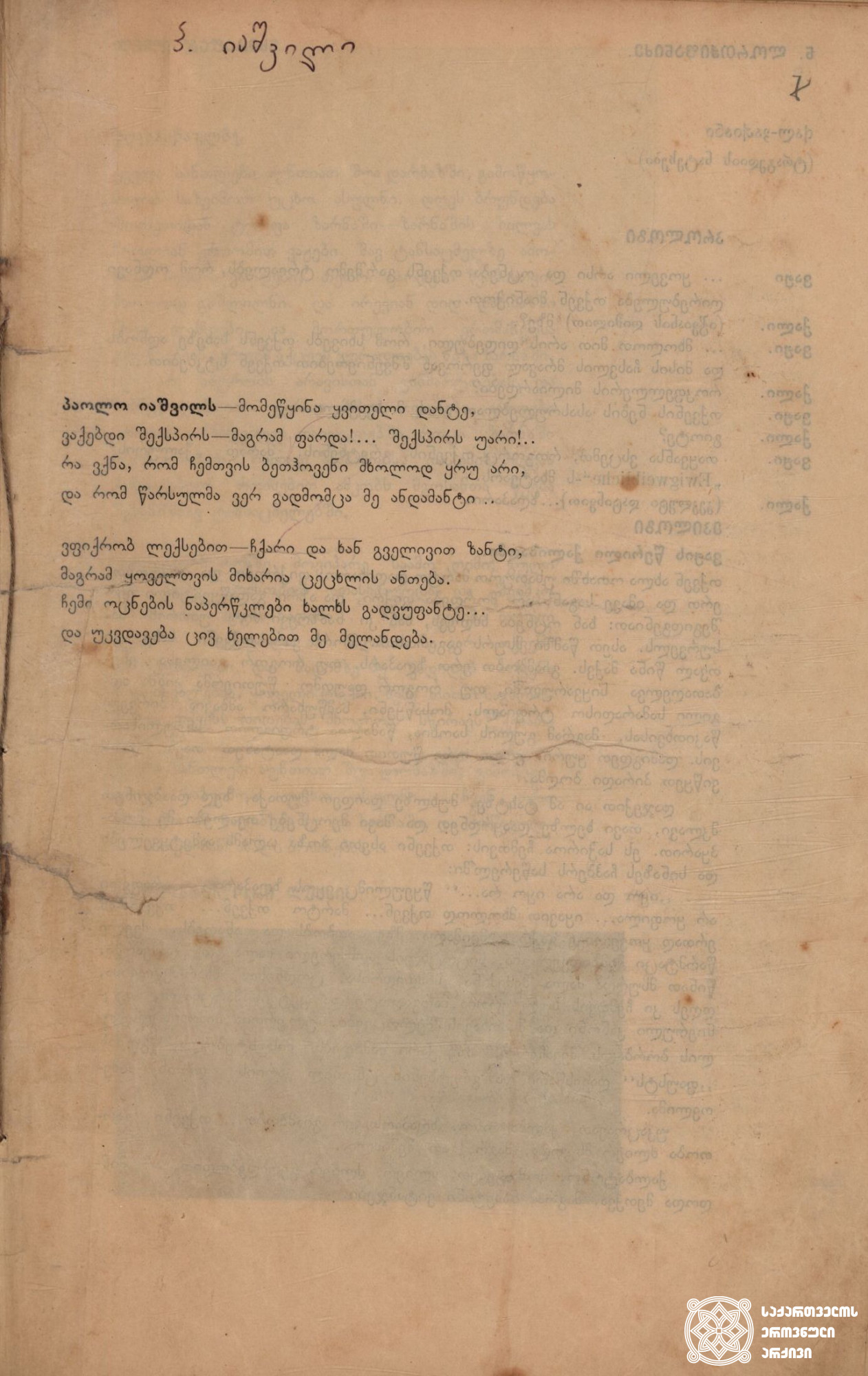
სრულიად მოულოდნელად ამ წერილში მოხვდა თითქმის ყველა მწერალი, რომელიც აჩერებს ყურადღებას. ამიტომ მინდა მივუმატო კიდევ ორი: ვ. გაფრინდაშვილი და პ. იაშვილი. ამათ მოაქვთ რაღაც ჩვენს პოეზიაში და იმაში, რაც მათ მოაქვთ, არის გრძნობა, არის სიახლე. ვ. გაფრინდაშვილის „ძაღლის სიმღერა“ და „ოცნება წვიმაში“ უჩვეულოა ჩვენი პოეზიისთვის. „მეფის ქორწილი“ პ. იაშვილის იმის გარდა, რომ გაბრმავებს ნათელი ფერადებით, პირველი ლექსია ქართულად ტრიოლეტებით დაწერილი. მე ვუცდი რომ იმათ შეკრან თაიგული და უფრო გამოაჩინონ თავიანთი პოეტური სახე... ამათ მოაქვთ ჩვენში ნამდვილი მოდერნიზმი...
არის ნიადაგი ჩვენში სიმბოლიზმისთვის?
5.
ქართველ ხალხში სცხოვრობს უკვდავი აქტიორული სული. იმას უნდა მუდამ სხვა იყოს, იმას უყვარს თეატრალიზაცია ცხოვრების; რატომ იღებება ქართველი ქალი? ესეც ხომ მოდის ბრალი არ არი. ამას ჩვენში ხომ დიდი ისტორია აქვს. მიზეზი აქაც იგივეა, ეს აქტიორობა და თეატრალიზაცია ცხოვრების. ეს ბუნება შეუსწავლელია ჯერ სრულიად.
ქართველ ხალხს უყვარს ნიღაბი, სიმბოლიზმი სწორედ ფილოსოფიაა ამ ნიღაბის.
და ამიტომ სიმბოლიზმი ჩვენში აუცილებელია.
ჩვენში მზადაა ნიადაგი მოდერნიზმისთვის.
გრიგოლ რობაქიძე ერთ თავის ლექციაში სამი წლის წინად ამტკიცებდა, რომ არსებობს ერთგვარი „ატმოსფერული გავლენა იდეების“, რომელიც შეუცნობლად იპარება სულში. მერეჟკოვსკის ერთ შარშანდელ ფელეტონში ეს ამგვარი აფორიზმით გამოითქვა: ბევრს ჩვენგანს არ წაუკითხავს კანტის „კრიტიკა წმინდა გონების“, მაგრამ სიკვდილის დროს უსათუოდ იგრძნობს იმის გავლენასო...
ამნაირად ყველა არგუმენტი იქეთკენ არის, რომ სიმბოლიზმი აუცილებელია.
მართალია დღეს ჩვენში მეფობს სუმბური და გაურკვევლობა.
ერთი ჩვენში უკვე სახელიანი კრიტიკოსი ურჩევს ახალგაზდა მწერლებს რაფიელ ერის-თავს მიბაძონ, მაგრამ ეს გადავა თავისით.
ცხოვრება თავისას მოითხოვს და წაიღებს კიდეც. უჭკუო რეცეპტებს არ ემორჩილება იგი. მწერლობა თავისით დაიხვეწება, კათაკმეველნი თვითონ მიხვდებიან. წასვლის დროს და არ მოუცდიან შეძახებას...
6.
სიმბოლიზმი ჩვენში რომ უცხოეთიდან მოდის, ამაში არაფერი საფრთხე არ არი. ჩვენ ვიცით, რომ ისტორიულ დროში საქართველო იმყოფებოდა ბევრ სხვა და სხვა კულტურის გავლენის ქვეშ. ბევრი გადმოუღია იმას ბერძნულ, არაბულ, სპარსულ კულტურის, ბევრი იმათთვისაც გაუტანებია. ამას არაფერი დაუშლია რუსთაველისთვის შეექმნა „ვეფხის ტყაოსანი“, რომელშიაც უაღრესად არი გამოჩენილი ქართული სული. უკანასკნელ დროს ჩვენში დამკვიდრდა ერთგვარი ცვლა ლიტერატურულ შკოლათა, იმ გეგმით, როგორც ევროპაში.
აქ იდეები სამუდამო ცვლაშია. როცა ხალხი იღებს სხვისაგან რამეს, იმას თავის ბრძმედში ატარებს. ნაციონალური აპერცეპციის ძალით ერი ითვისებს იმას, რაც მის ეროვნულ თავისებურობას ეგუება, რასაც იმასთან ახლობელი კავშირი აქვს.
სიმბოლიზმს ამ შემთხვევაში ბევრი შეუძლია მოუტანოს ქართველ ერს.
პირველ ყოვლისა ჩვენში დავიწყებულია სიტყვა. არ არსებობს ერთი შრომა, ქართული ლექსის ბუნებას რომ იკვლევდეს.
გეუბნებათ თქვენ რამეს ბესიკის და აკაკის ანბანთა ქება?..
სიმბოლიზმის, როგორც ფორმის გაღმერთების გაგება, როგორც პრიმატი „როგორის“ „რაზე“ - გაუგებრობაა. ამგვარი დასმა საკითხის მიუღებელია, რადგან იგი გულისხმობს განცალკევებას იქ, სადაც კონკრეტულად არსებობს მხოლოდ ერთიანობა. მაგრამ ფორმას უნდა მიექცეს დიდი ყურადღება, ვიტყვი კიდეც ჩვენში, სადაც სიტყვა კარგავს თავის თვითმთმობ ღირებულებას, განსაკუთრებით დიდი მნიშვნელობა უნდა მიექცეს, და სრული გატაცებაც მითი საჭირო არის. ქართულ სიტყვის გაღატაკებას მიაპყრეს ყურადღება გრ. რობაქიძემ, არჩილ ჯორჯაძემ.
გერონტი ქიქოძემ ნათლად დაგვანახა თუ სანამდი მიიყვანა ვაჟამ სიტყვა.
მე ვათავებ წერილს.
გრ. რობაქიძის ბარათში, რომელიც „ოქროს ვერძს“ მისწერა, ის ამბობდა: „საქართველოს რენესანსი დაიწყო, წარმოვთქვი ერთხელ. და ამ სიტყვების სიმართლეს დღითი დღე ვგრძნობ. მაგრამ რენესანსი. იგი ჯერ კიდევ ქაოსისა და ფორმის ბრძოლაში აშკარავდება და კიდევ დიდი დროა საჭირო, რომ ფორმამ სძლიოს. სავსებით ქაოსსა. ეს ფიქრები მებადება, როცა შევსცქერი უახლოესი ხელოვნების ზრდას.“
ჩვენ გვინდა დავიჯეროთ, რომ რენესანსი დაიწყო, მხოლოდ ძალიან დიდხანს გასტანს ფორმისა და ქაოსის ბრძოლა.
მომავალ დიდ ქართველ მხატვარში უნდა შეხვდეს რუსთაველი და მალარმე. რუსთაველი მე მესმის როგორც ქართული სიტყვის შემკრები ერთეული და მალარმე ამავე აზრით ევროპის პრეზენტიზმისა და ფუტურიზმის.
ეს გზა აუცილებელია. როგორც უნდა გათავდეს ომი, აშკარაა წინა აზიაში ევროპა შემოაღებს კარებს და ამ დროს ჩვენ უნდა დავხვდეთ შეჭურვილი ეროვნული შემეცნებით, ეროვნულ კულტურის ყველა ფოლაქებ შეკრული, რომ იყოს მთავარი მორგვი, რომელზედაც მოეხვევა ახალი იდეები.
ჩვენ ვიზამთ ამას. მაშინ იქნება ნამდვილი რენესანსი და ამ ეროვნულ აღორძინების სადღეგრძელოს სრულიად სერიოზულად ვსვამ „ცისფერ ყანწებით“.
January 26, 1916
The Blue Horns
Seated in the front row, from left to right: Nikolo Mitsishvili, Tamar Iashvili (Paolo Iashvili’s wife), Sandro Shanshiashvili, and his wife, Maro Shanshiashvili.
Seated in the second row: Valerian Gaprindashvili, Ephemia Leonidze, Geronti Kikodze, Paolo Iashvili, Nino Tabidze (Giorgi Leonidze’s wife), and Ali Arsenishvili.
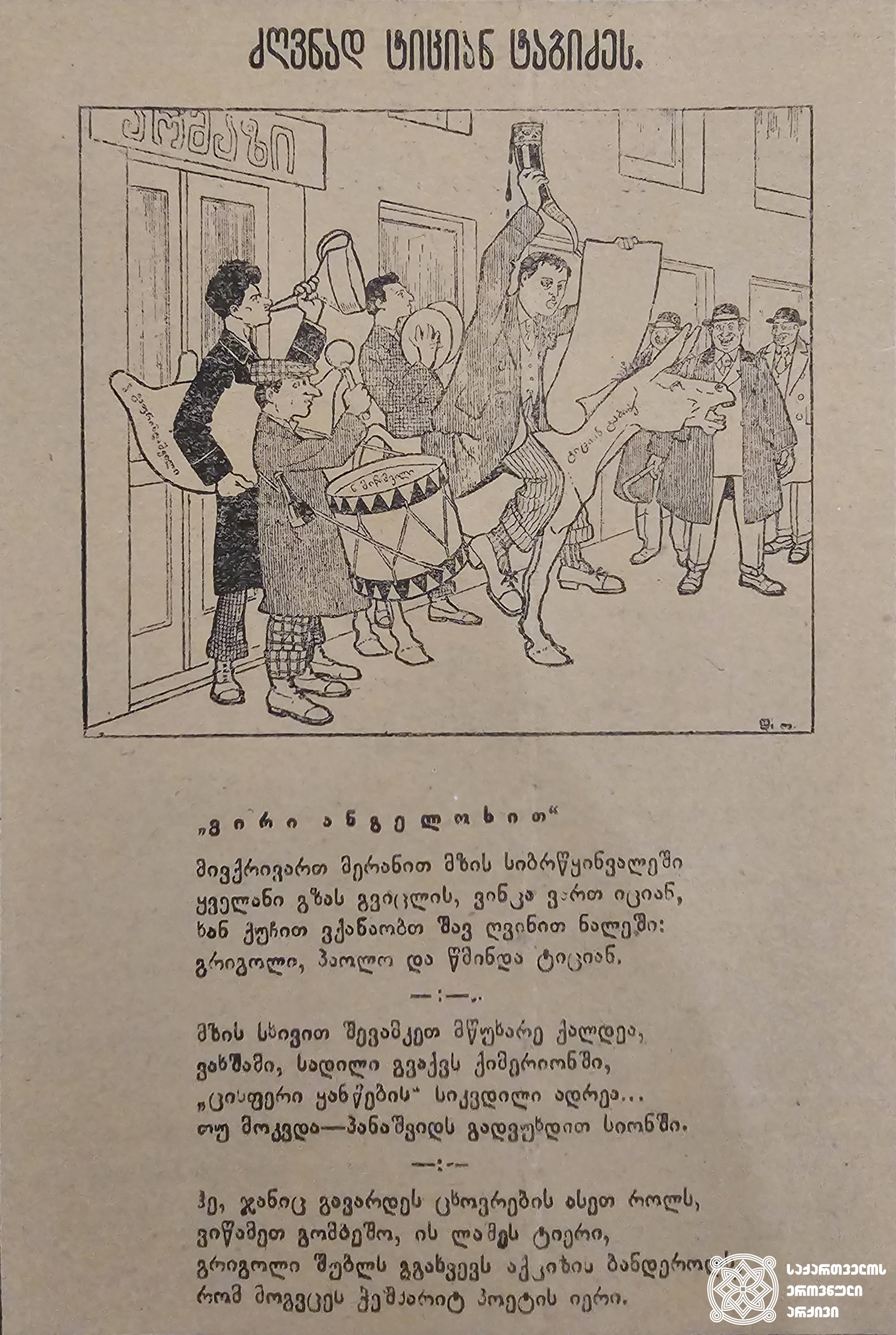
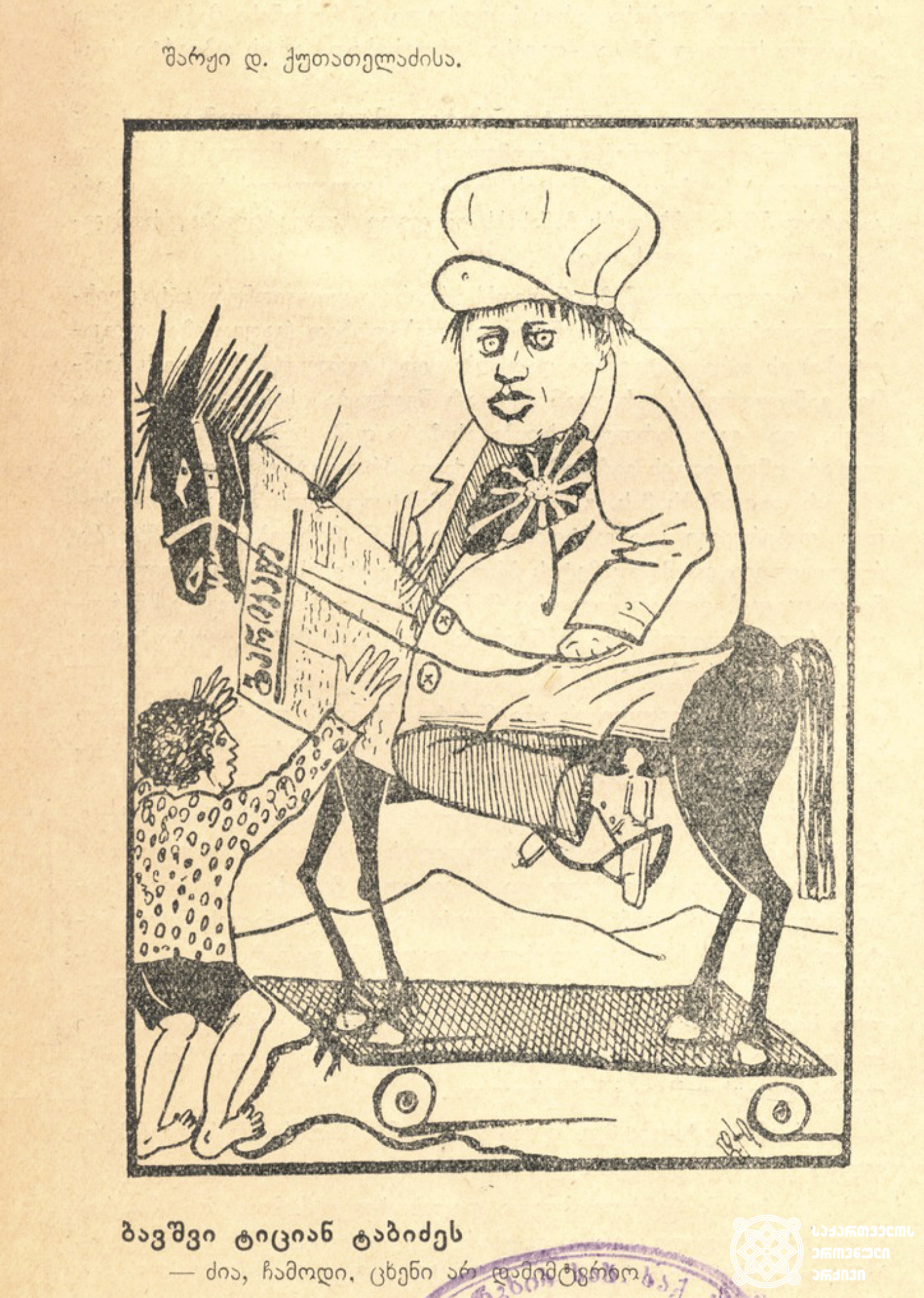
Caricature of Titsian Tabidze
Artist: Paolo Iashvili
Theatre and Life magazine, May 1, 1920
To Titsian Tabidze
„ორბელიანი მოქეიფე
რჩება გადაღმა,
ლხინში რომ მაინც ტოლი გყავდეს,
ნეტავ მანახა!
თვით მალარია შენი სუნთქვით
სისხლში გადახმა.
კახეთის სიძევ!
არგონავტო ოქროს ვერძებით -
ეს თვითონ შენ ხარ!
ამაოდ კი სხვაგან ვეძებდი!“
Sandо Shanshiashvili, 1925
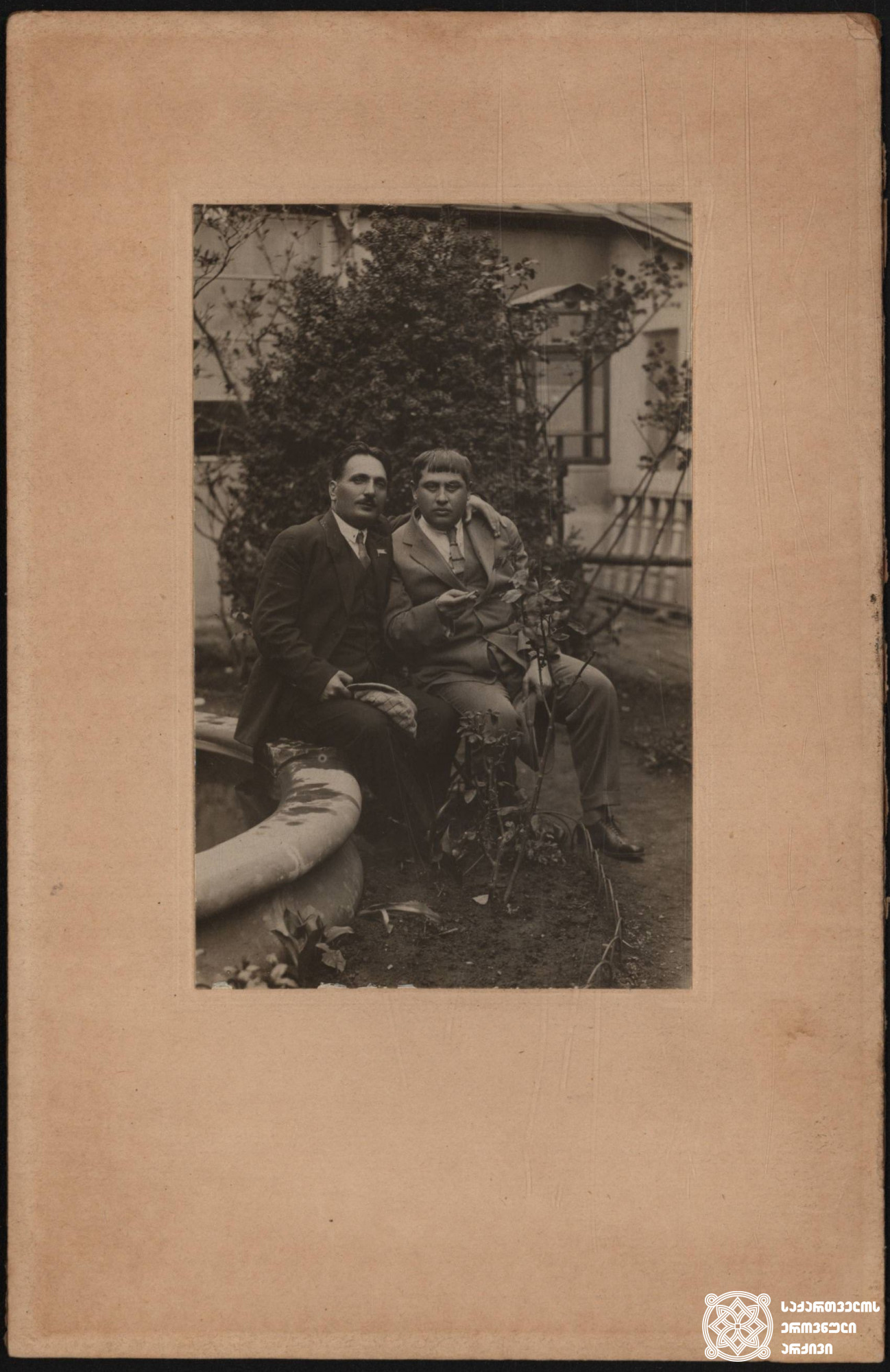
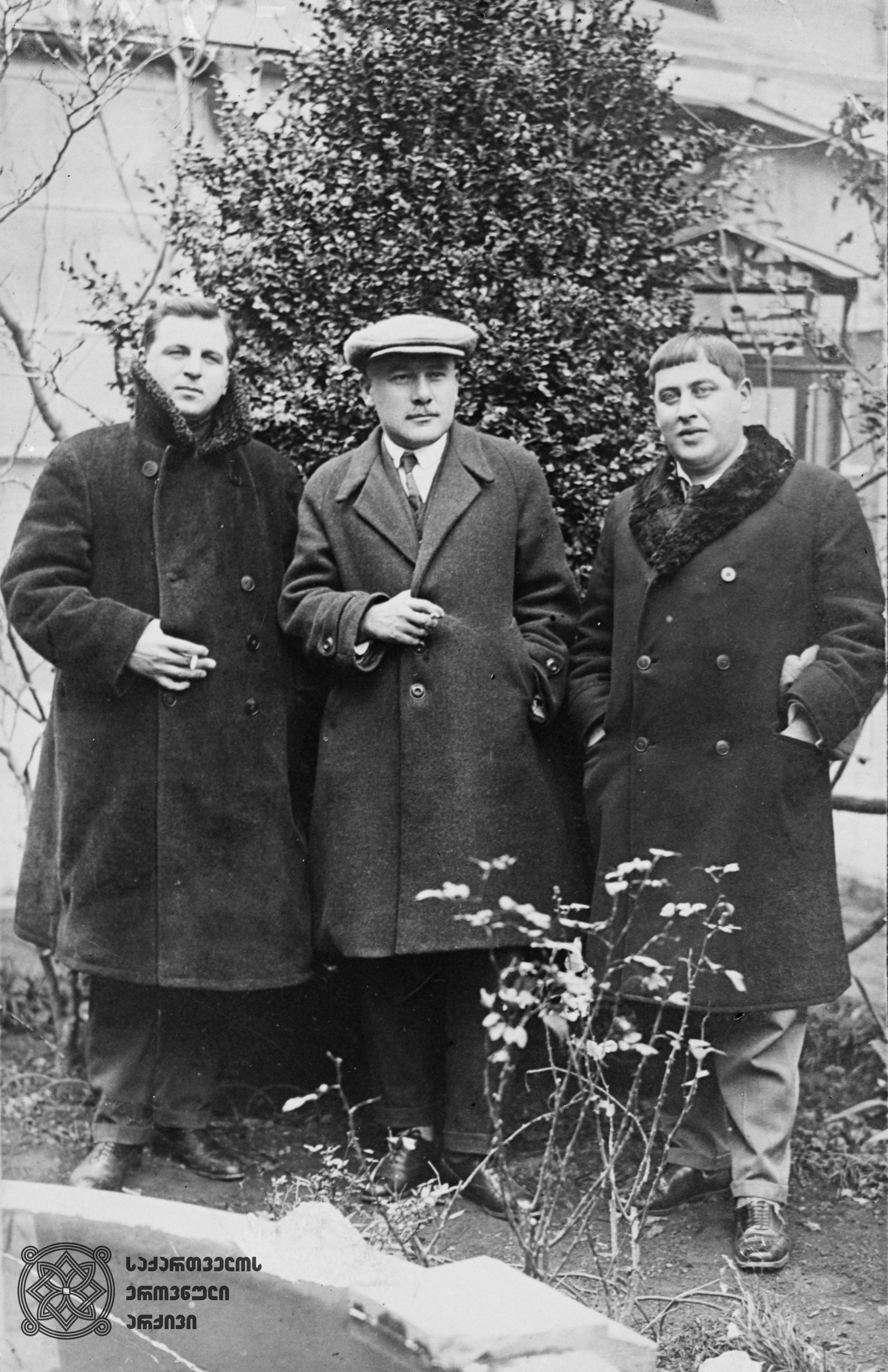
In the photograph: Sandro Shanshiashvili and Titsian Tabidze. 1920s. Preserved at the National Archives of Georgia, in Sandro Shanshiashvili’s personal collection.
“Then, victory!” exclaims Erosi Manjgaladze.
From 1917 onward, following his return to Georgia, Titsian Tabidze was actively involved in public affairs. Alongside his participation in literary associations, he published newspapers and took part in the political life of the First Republic of Georgia. In 1917, he joined the National Democratic Party of Georgia, in whose official newspaper, Sakartvelo (Georgia), he published articles addressing social, political, religious, and artistic issues.
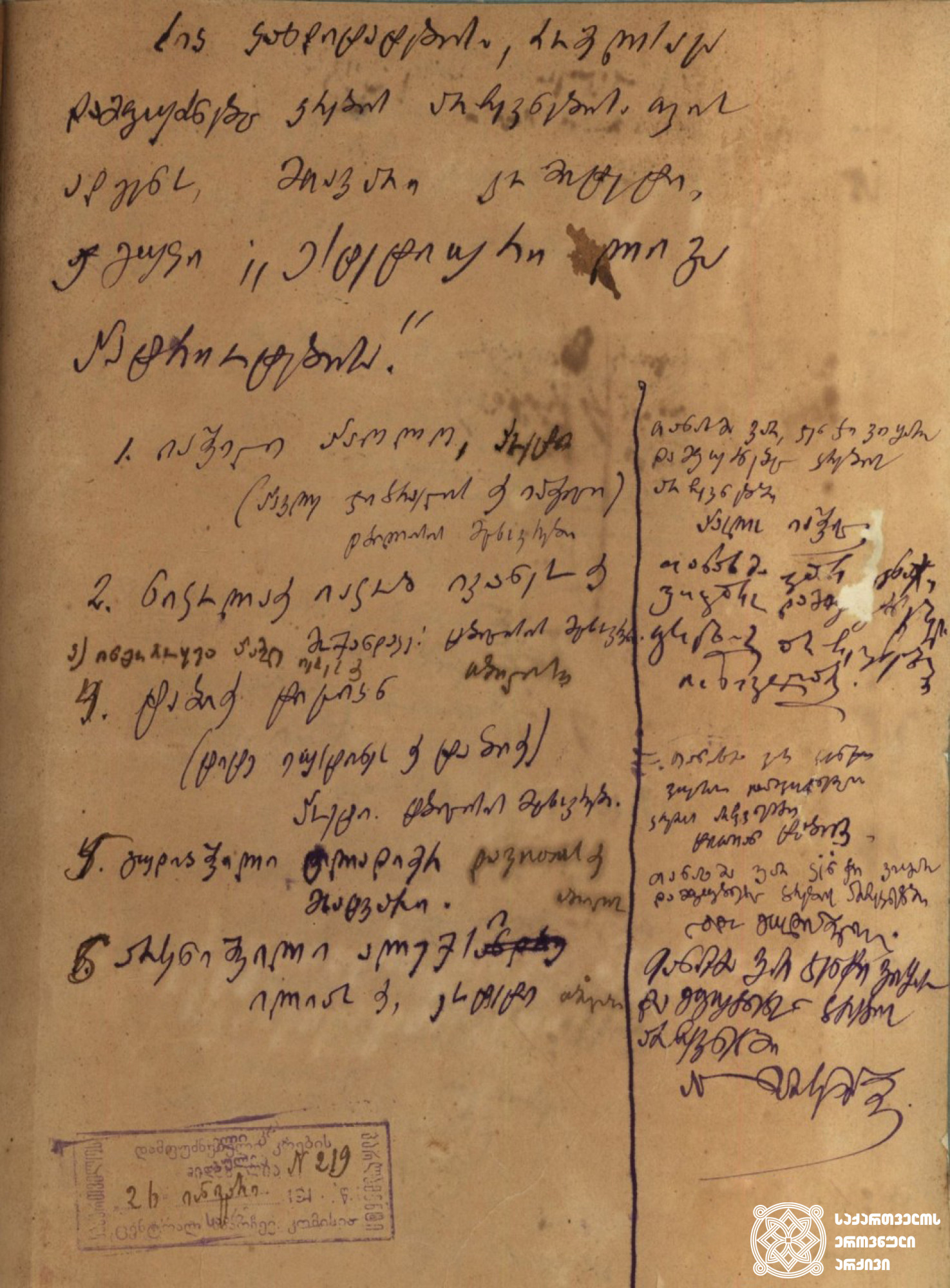
Following the declaration of Georgia’s independence, he and his like-minded associates established a political organization called the “League of Patriotic Aesthetes,” which took part in the 1919 elections to the Constituent Assembly, the legislative body of the First Democratic Republic of Georgia.
Electoral list of the “League of Patriotic Aesthetes”: 1. Paolo Iashvili, 2. Iakob Nikoladze, 3. Pavle Ingorokva, 4. Titsian Tabidze, 5. Vladimir Gudiashvili, 6. Aleksi Arsenishvili.
This group of Georgian writers and artists ran in the 1919 elections to the Constituent Assembly of Georgia under this very list. The handwritten list is accompanied by the candidates’ consent to stand for election.
It is noteworthy that the party failed to secure the required number of votes and consequently did not gain representation in the Constituent Assembly.
In 1918, Titsian Tabidze met Nino Makashvili, whom he married in 1920. An admirer of the Symbolist poets, Nino was a physician by education. Between 1934 and 1960, she wrote her memoirs, preserving invaluable accounts of Titsian and his friends. Titsian and Nino had one daughter, Nita (Tanit) Tabidze.
In the photograph: Titsian Tabidze, Nino Makashvili, and Nita (Tanit) Tabidze. 1920s.
From Nino Makashvili’s memoirs:
„კოტე გამსახურდიამ, რომელიც მაშინ ჩემი თაყვანისმცემელი იყო, მიხაკების მთელი თაიგული მომართვა. ყვავილები შინ წავიღე, ერთი მიხაკი კი ყელსახვევში გავირჭე. ასე წავედი ქართულ ჩაიხანაში, რომელიც ფრონტზე წასული ქართველი ჯარისკაცების დასახმარებლად გაეხსნათ. იქ თავს იყრიდა მთელი თბილისის ინტელიგენცია. მაგიდას რომ ვუახლოვდებოდი, მართა ბერიშვილმა (მაჩაბელმა), ჩემი მეგობრის, ნინოს დამ, მიხაკი გამომტაცა. მართა ტიციანის გვერდით იჯდა. იქვე მყოფი გამსახურდია, როგორც სჩვეოდა, ახმაურდა. მე ავდექი და პირდაპირ მათკენ გავემართე, რომ ყვავილი დამებრუნებინა, მაგრამ მართა გაჯიუტდა. მაშინ ტიციანმა საღილედან თავისი მიხაკი ამოიძრო და მე გამომიწოდა. ჩვენ ერთმანეთს არ ვიცნობდით და უკვე გაბრაზებას ვაპირებდი, მაგრამ ეს შენიშნა და მითხრა: - მეგონა, თქვენ არ გექნებოდათ მეშჩანური წარმოდგენები. მე ხომ თქვენ გიცნობთ - თავადის ასული ნინა მაყაშვილი ბრძანდებით. მადლობა გადავუხადე და ყვავილი გამოვართვი. მაგრამ ამის შემდეგ კოტე გამსახურდიამ უფრო დიდი ალიაქოთი ატეხა და მე ჩაიხანიდან წამოვედი. შინ დავბრუნდი.
გამსახურდიაც უკან გამომყვა. გზაში მიამბო, რომ დილით, როცა ჩემთვის თაიგულს ყიდულობდა, ტიციანი მიუახლოვდა, თაიგულიდან ერთი მიხაკი ამოიღო, გულზე დაიბნია და უთხრა: – ამ ერთადერთ ყვავილს ვაჩუქებ წითელ ქალიშვილს, და მისთვის ეს შენს თაიგულზე ძვირფასი იქნებაო. მაშინ „წითელ ქალიშვილს“ მეძახდნენ, რადგან სულ წითლებში გამოწყობილი დავდიოდი, მას შემდეგ მე და ტიციანი ხშირად ვხვდებოდით ერთმანეთს. ის ქუთაისში თავის მეგობრებს სწერდა, რომ გაიცნო გოგონა, რომელსაც საოცრად უყვარს პოეზია (მაშინ ასეც არ მიყვარდა!). მე, ტიციანი და პაოლო საათობით დავეხეტებოდით ქალაქში. ტიციანი ძველ თბილისს მაცნობდა, ჩვენი დედაქალაქი ტრაგიკულ ათასწლოვან ისტორიას მიამბობდა“.
“Rainbow at Dawn,” Tbilisi, 2016
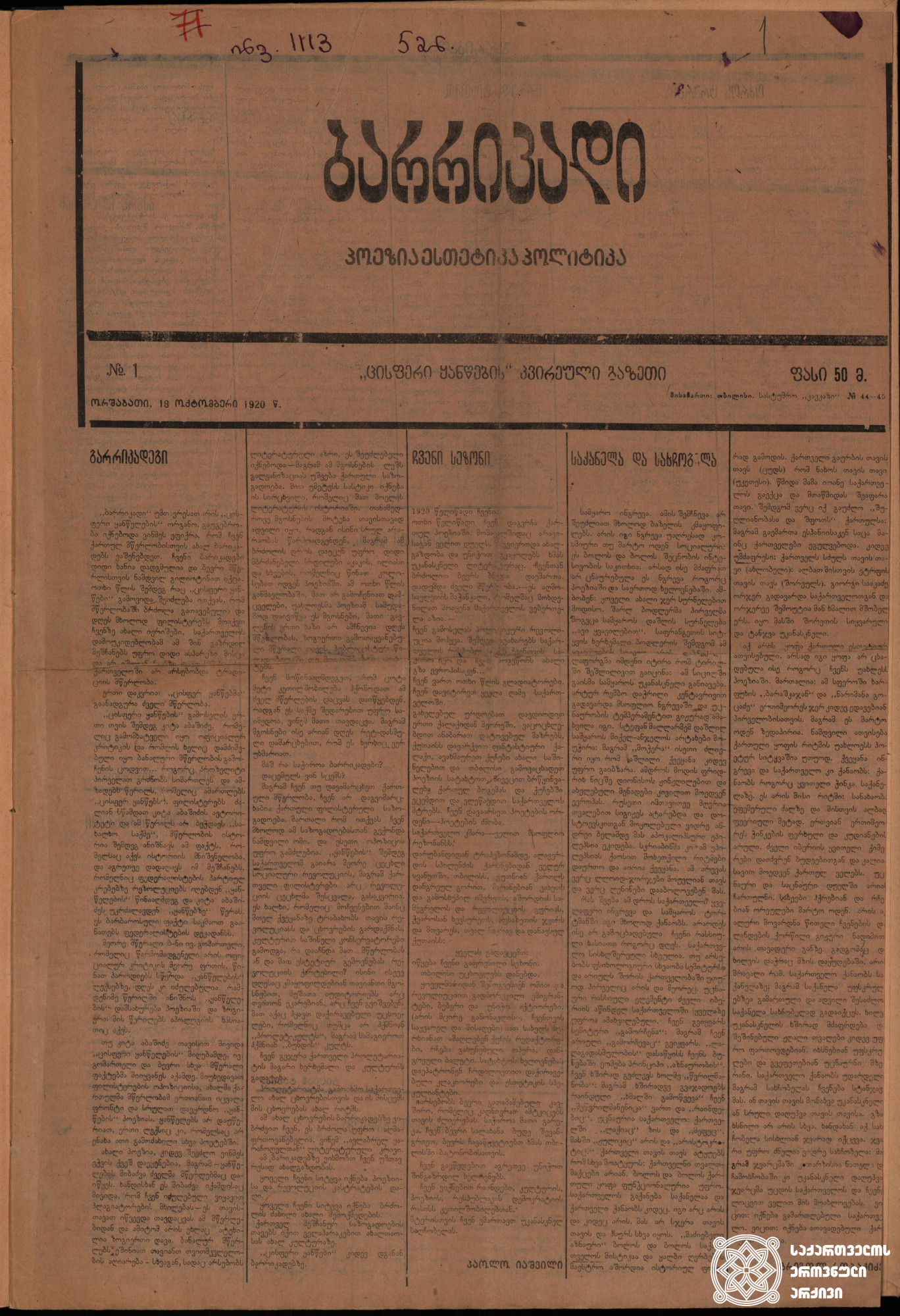
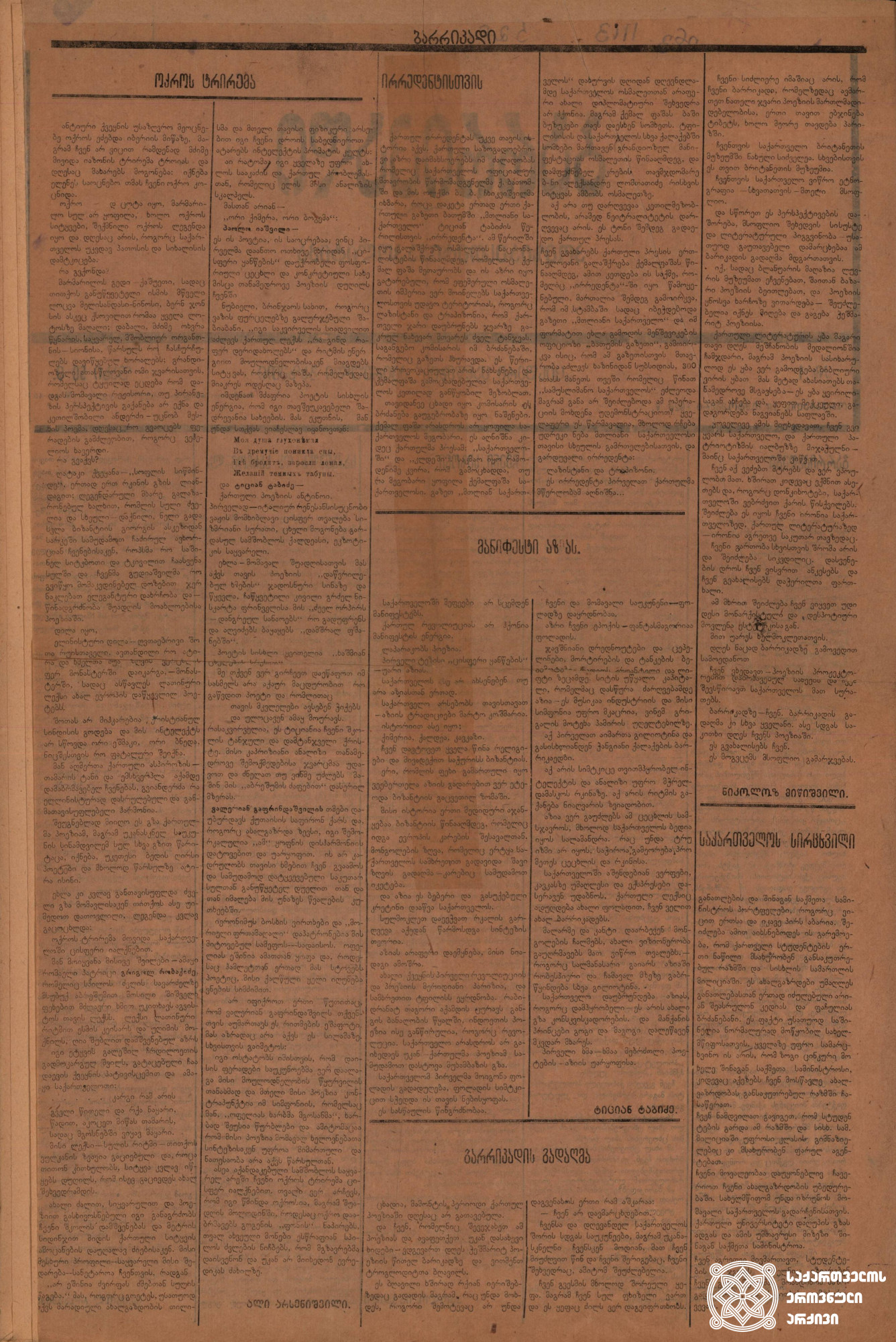
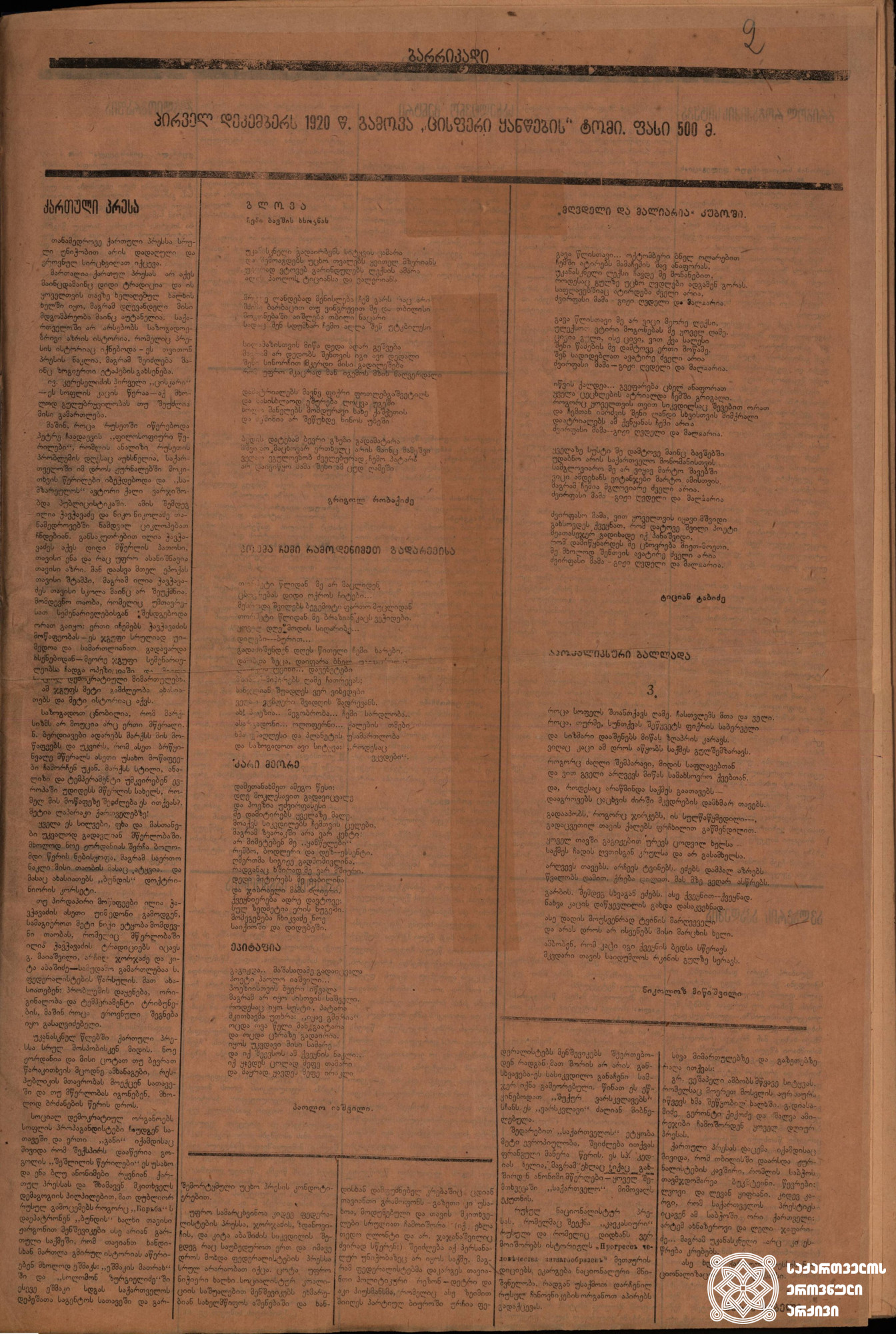
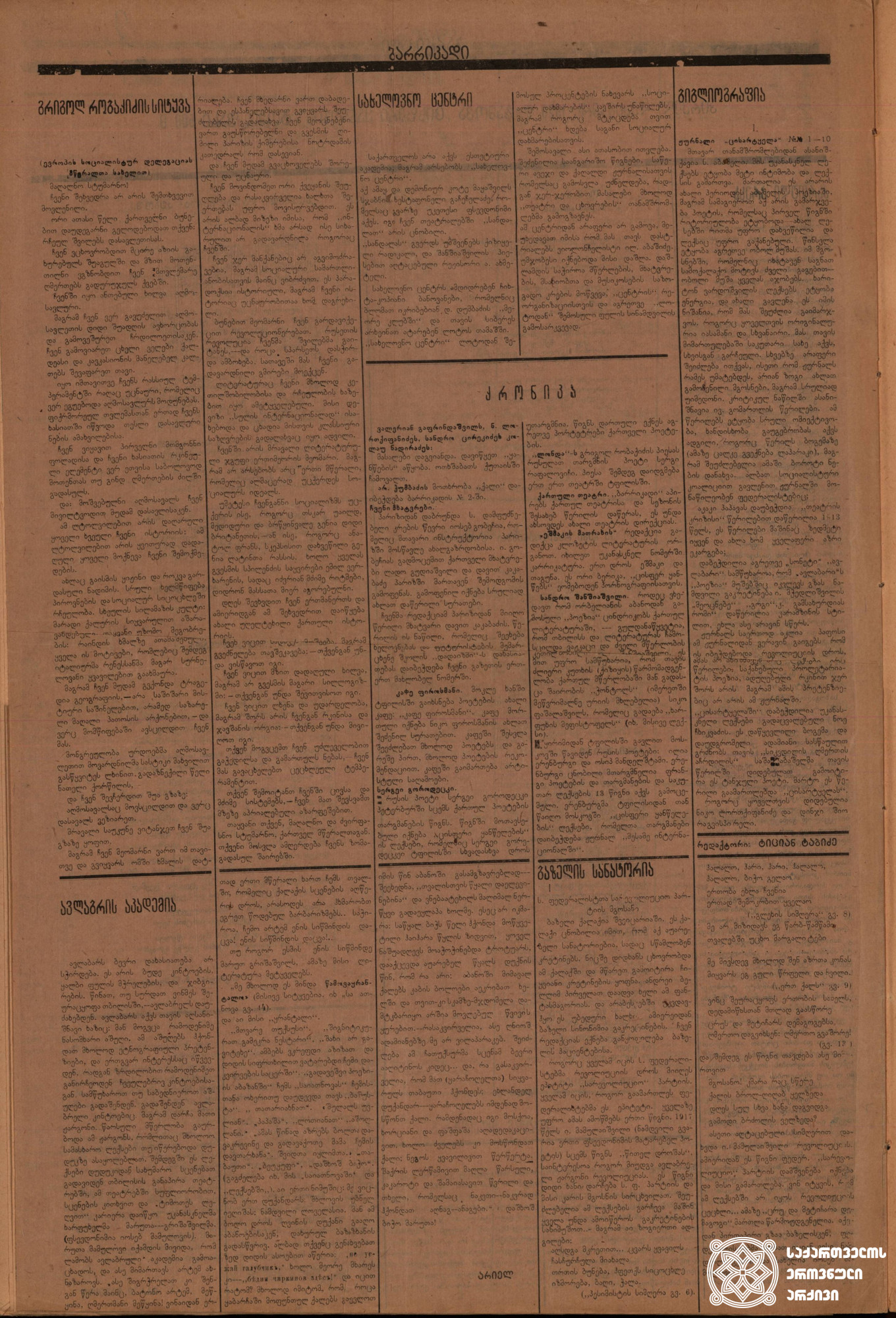
In 1920, another publication of the Blue Horns literary group was established: the newspaper Barrikadi (The Barricade), with Titsian Tabidze serving as its editor.
The very first issue of the newspaper featured Titsian Tabidze’s “Manifesto to Asia,” in which the poet envisioned a European future for Georgian poetry:
“The meridian of the first revolution and poetry of the new world is Paris, resting to the south upon Tbilisi... Georgia will never look back—the poetry of Georgia has forever abandoned the path of the mukhamambazi... Shipyards will rise in Georgia, taller than the Caucasus, and express trains will crisscross the desert. Georgian poetry, too, will be forged in new steel. We await new barricades.”
The Blue Horns newspaper Barrikadi (The Barricade), No. 1.
“... I was killed by bandits on the Aragvi,” recites Erosi Manjgaladze.
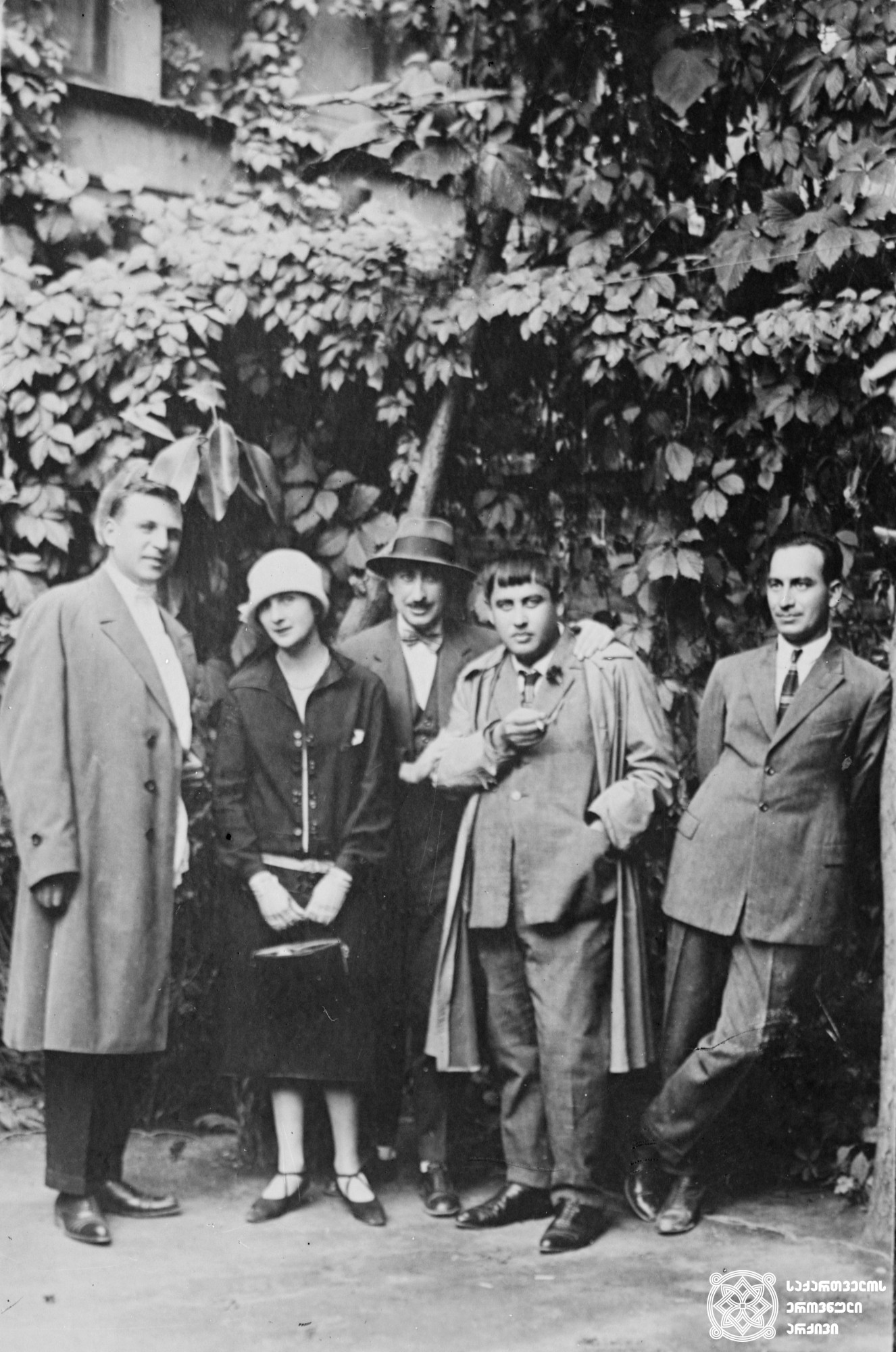
In the photograph, from left to right: Giorgi Leonidze, Tamar Bolkvadze, Leli Japaridze, Titsian Tabidze, and Shalva Apkhadze 1920s
Lado Gudiashvili’s recollections of Titsian Tabidze and the painting of Café Kimerioni. 1978.
The “Blue Horns” literary café Kimerioni, which opened in 1919 in the basement of the building that now houses the Rustaveli Theatre, was a gathering place for poets and artists. “Perhaps there is no other café in the entire country that accommodates as much inspiration and creativity as ‘Kimerioni’. The café’s walls were entirely covered with paintings,” Titsian wrote.
“On June 16, 1919, at the building of the Nobility Land Bank, the leadership of the Writers’ Union discussed, among other matters, the opening of an art club at the Anona Restaurant. Later that year, the Union of Georgian Writers purchased the restaurant from the City Council and established a café-restaurant-club there under the name ‘Kimerioni’. The Writers’ Union Council reportedly held ten meetings before settling on a name for the café. Numerous suggestions were put forward, including ‘Kimereti’ by Paolo Iashvili and ‘Kimeria’ by Titsian Tabidze. The winning suggestion was ‘Kimerioni’, a word taken from a poem by V. Gaprindashvili. The idea belonged to Grigol Robakidze.” (Manana Tevzadze, “On the History of the Rustaveli Theatre Building”, Tbilisi, 2022.)
Video: A feature on the restoration of the mural paintings at Café Kimerioni. Film Journal “Soviet Georgia”, 1983.
Veriko Anjaparidze’s recollections of Titsian Tabidze and Café Kimerioni. 1978.
During the occupation of Georgia by Bolshevik Russian forces in February 1921, “panic gripped the city. Paolo firmly urged Titsian to take his wife and child to the countryside for safety. Titsian escorted them to a safe place and soon returned to the city.
From General Mazniashvili’s memoirs:
“At the station, among the passengers, I noticed ... Paolo Iashvili, Titsian Tabidze, and Levan Metreveli. They came to me and asked for my advice ... ‘You must go to the enemy immediately. You must tell them that the Georgian government and its troops have left Tbilisi and ask them to take measures to prevent the scoundrelly elements among the population from taking advantage of the chaos and resorting to looting and plunder.’”
Paolo hastily organized a mounted unit of young men, which patrolled the city’s districts even before the troops entered. Later, together with Galaktion Vashadze, he set out under a white flag to meet with the Georgian political leaders of the Bolsheviks.
During their years as students at the Kutaisi Gymnasium, some of them had become friends with Titsian and Paolo. At the time, Paolo and Titsian had indeed made a significant contribution, as confirmed by the memoirs of L. Metreveli, G. Vashadze, T. Tsulukidze, I. Abashidze, and Al. Baramidze.
Through the efforts of Titsian and Paolo once again, the new government organized a meeting with Tbilisi’s artists and handed over the Sarajishvili mansion—which at the time belonged to Akaki Khoshtaria and is now the Writers’ House. Artists who had no homes were temporarily accommodated there, including Titsian, Paolo, Galaktion, Meliton Balanchivadze, and others. However, Nino felt uncomfortable staying there with an infant and went to live with her uncle at 18 Griboedov Street, where Titsian’s house museum is now located.
Lali Avaliani, Foreword to the book “Rainbow at Dawn,” Tbilisi, 2016.
Following the occupation of Georgia, the Bolshevik authorities set about establishing control over every sphere and, naturally, over the creative arts as well. Just a few months after the loss of independence, the persecution of the Blue Horns (Tsisperqantselebi), including Titsian Tabidze, began. The poets were ridiculed, and their poetry was mocked.
“In 1923, the slogan ‘Back to the Land’, advocated by V. Gaprindashvili and Gr. Robakidze, proved timely. Titsian’s poetry gradually began to move away from its ‘academic’ inclinations, while the realist current grew stronger in both his love poetry and patriotic verse…
Following the unprecedentedly brutal suppression of the 1924 uprising, the illusion of artistic freedom in a totalitarian state was finally shattered. The periodicals of the ‘Blue Horns’ were banned, if not de jure, then de facto. Despite attacks by proletarian writers, Paolo and Titsian continued to serve as the foremost hosts and guides to foreign visitors… Their rivals could not rest; they were furious that the ‘Blue Horns’ still maintained their dominance in Georgian poetry. Paolo and Titsian remained ‘Siamese twins’, even when, in 1935, they were forced to sign a statement published in Mnatobi, condemning the ‘fascist’ Robakidze on the basis of fabricated accusations concocted by the Cheka.
In 1935, they acted as guides to the renowned French writer André Gide, who had once been sympathetic towards the Soviet Union. The Georgian poets concealed nothing from him, a decision that would later come back to haunt them: after returning from the USSR, André Gide had become disillusioned and published a critical account. ‘Your French got you into trouble,’ Beria reportedly told Paolo. Titsian, too, was repeatedly reproached for his association with Gide, both at the Writers’ Union and in the dungeons of the Cheka.”
Lali Avaliani, Foreword to the book At the Dawn of the Rainbow, Tbilisi, 2016.
Following the occupation of Georgia, the Bolshevik authorities set about establishing control over every sphere and, naturally, over the creative arts as well. Just a few months after the loss of independence, the persecution of the “Blue Horns” (Tsisperqantselebi), including Titsian Tabidze, began. The Symbolist poets were ridiculed, and their poetry was mocked.
Lali Avaliani writes in the foreword to the book “At the Dawn of the Rainbow”:
“In 1923, the slogan ‘Back to the Land’, advocated by V. Gaprindashvili and Gr. Robakidze, proved timely. Titsian’s poetry gradually began to move away from its ‘academic’ inclinations, while the realist current grew stronger in both his love poetry and patriotic verse…
Following the unprecedentedly brutal suppression of the 1924 uprising, the illusion of artistic freedom in a totalitarian state was finally shattered: the periodicals of the ‘Blue Horns’ were banned, if not de jure, then de facto. Despite attacks by proletarian writers, Paolo and Titsian continued to serve as the foremost hosts and guides to foreign visitors…
In the photograph: A caricature of the “Blue Horns” poets Titsian Tabidze, Nikolo Mitsishvili, Paolo Iashvili and Valerian Gaprindashvili. Newspaper “Mushа”, December 27, 1922.
Their rivals could not rest; they were furious that the “Blue Horns” still maintained their dominance in Georgian poetry. Paolo and Titsian remained “Siamese twins”, even when, in 1935, they were forced to sign a statement published in “Mnatobi”, condemning the “fascist” Robakidze on the basis of fabricated accusations concocted by the Cheka.
In 1935, they acted as guides to the renowned French writer André Gide, who had once been sympathetic towards the Soviet Union. The Georgian poets concealed nothing from him, a decision that would later come back to haunt them: after returning from the USSR, André Gide had become disillusioned and published a critical account. “Your French got you into trouble,” Beria reportedly told Paolo. Titsian, too, was repeatedly reproached for his association with Gide, both at the Writers’ Union and in the dungeons of the Cheka.”
In the photograph: Magazine *Drosha*, 1924, No. 6
“...Extinguish the bells of Zion within your soul.” Read by Akaki V asadze, 1971.
Several film clips have preserved the living image of Titsian Tabidze. Among them, particularly noteworthy for its content and quality is director Kote Marjanishvili’s film Gogi Ratiani, in which the poet Titsian Tabidze, composer Kote Potskhverashvili, and director Aleksandre Tsutsunava portrayed themselves.
Excerpts from the feature film Gogi Ratiani, 1927.
Among the documents preserved in the Archives concerning Titsian Tabidze, the materials held in the “Writers’ Union” collection are particularly noteworthy:
Questionnaire of the writer Titsian Tabidze, 1929.
Letter from Titsian Tabidze to the Presidium of the Union of Soviet Writers of Georgia. The poet requests permission to travel to Germany (a trip that never took place):
“I kindly ask you to submit a request to the People's Commissariat of Education so that I may be sent on a three-month assignment to Germany:
I would also like to state that I will not require any foreign currency for the trip. I will stay with Grigol Robakidze, who has invited me...
I have never been abroad, and I will publish articles in our newspapers sharing my impressions with readers.”
December 8, 1932.” Autograph
“Poem – Landslide”, read by Akaki Vasadze, 1971.
“The Last Photograph of Titsian Tabidze
In 1937, Titsian Tabidze was the Executive Secretary of the Pushkin Jubilee Committee. The chairman was Philippe Makharadze, but he did not involve himself in the work of the Jubilee Committee, and Titsian was therefore left to handle virtually every matter related to the poet’s anniversary.
I also worked at the Pushkin Jubilee Committee. One day, the poet came into the Georgian National Museum, where we were preparing the Pushkin jubilee exhibition.
‘Sasha,’ Titsian said to me, ‘please call a photographer, and ask Mikheil Tumanishvili (who also worked on the committee) to come so that we can have our picture taken together.’
This was Titsian’s last photograph and his final visit to the Jubilee Committee.
1/V/1975. Aleksandre Sigua.”
In May 1937, Titsian Tabidze, Paolo Iashvili and Nikolo Mitsishvili were reprimanded at a meeting of the Presidium of the Writers’ Union. This was followed by the arrest of Nikolo Mitsishvili on June 2 and his execution on July 13. On July 22 of the same year, Paolo Iashvili took his own life at the Writers’ House. Titsian was asked to publicly denounce his friend Paolo Iashvili and accuse him of provocative conduct, but he refused to comply.
In October 1937, Titsian Tabidze himself was arrested. In a 2006 radio interview with journalist Eka Talakhadze, the poet’s daughter, Nita Tabidze, recalled her father’s arrest:
“He told me then, ‘My child, forgive me. Perhaps I have brought this upon you, but you will never have to feel ashamed when looking people in the eye... When the car arrived, I was the first to hear it. I woke my mother and father. Father came out and sat in an armchair, silent, without saying a word. As he was already leaving the house, Mother told me, “Whatever you do, do not say a word. Do not let your pain become an additional burden for him...”’”
Titsian Tabidze was executed on December 15, 1937. His burial place remains unknown. On September 21, 2011, a memorial commemorating prominent writers and artists who were repressed in 1937 and whose graves remain unidentified was unveiled at the Mtatsminda Pantheon. The memorial was designed by Nikoloz Maisuradze. It bears the names of Sandro Akhmeteli, Vakhtang Kotetishvili, Evgeni Mikeladze, Titsian Tabidze, Dimitri Shevardnadze and Mikheil Javakhishvili.
Giorgi Leonidze’s speech at the memorial evening dedicated to Titsian Tabidze. Conservatory Hall, 1961.
The materials featured on this page are preserved at the National Archives of Georgia.
The page was created by: Tea Kimeridze, Ana Mgebrishvili, Tamar Tavartkiladze, Teona Lazashvili, Ketevan Asatiani, Giorgi Kakabadze, Ekaterine Sanikidze, Marina Skhirtladze, Ketevan Sadagishvili, Shalva Mikutishvili, and Sophio Patsiashvili.